Zebra Blinds: Pros, Cons and the Rooms Where They Work Best
Zebra blinds are the most requested product in our sample bag. They earn that in most rooms, but not every room, so here is an honest look at both sides.
In short
- Pro: you control light and privacy without raising the blind.
- Pro: a clean, modern look, cordless or motorized, in dozens of fabrics.
- Con: never true blackout, because light passes at the band edges.
- Con: the view through the sheer bands is softened, not crystal clear.
On this page
What a zebra blind is
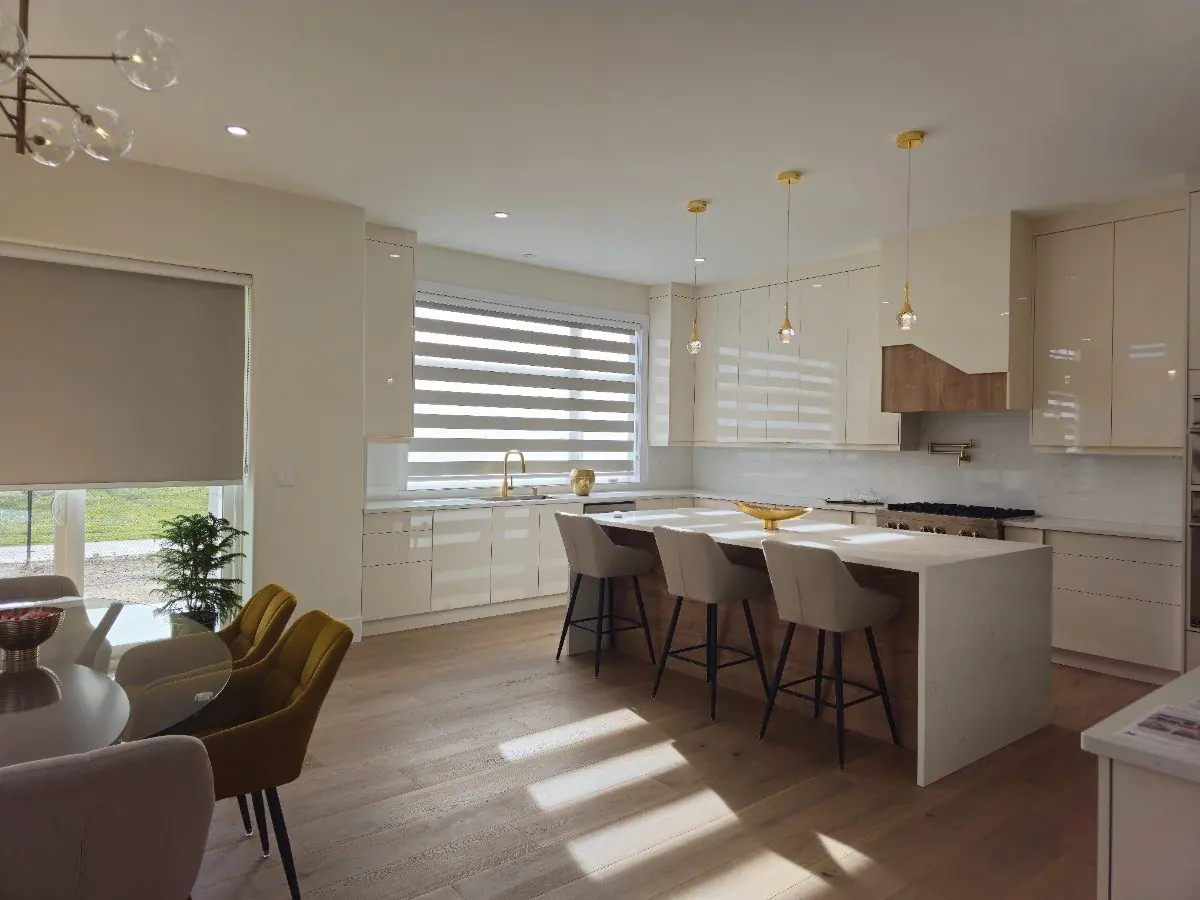
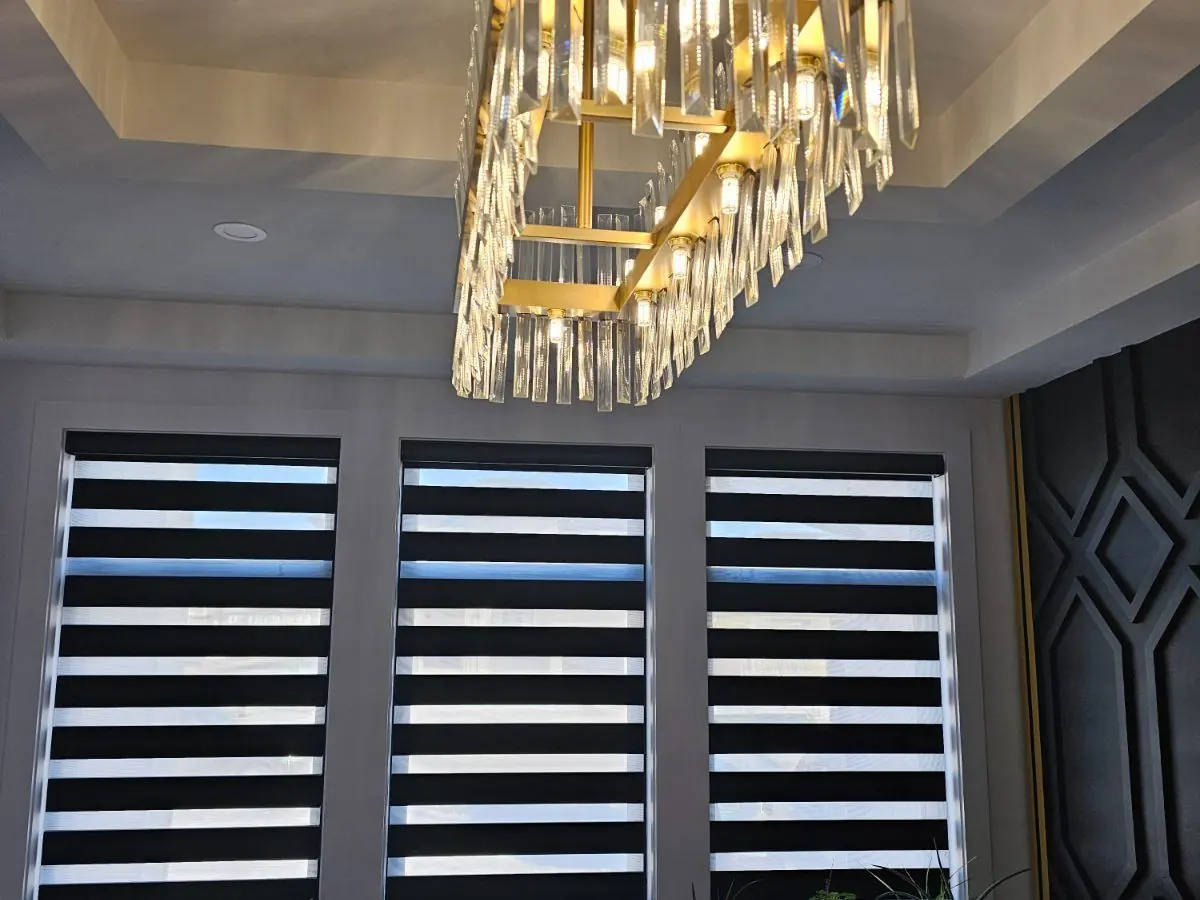
A zebra blind is a loop of fabric with alternating sheer and solid horizontal bands. The loop runs down the front and back up behind, so two layers always hang in front of the glass. Slide the layers so the sheer bands line up and you see out; slide them so the solid bands overlap and the blind closes. You may also hear them called dual shades, day-and-night shades, banded shades or combi blinds. They're the same product.
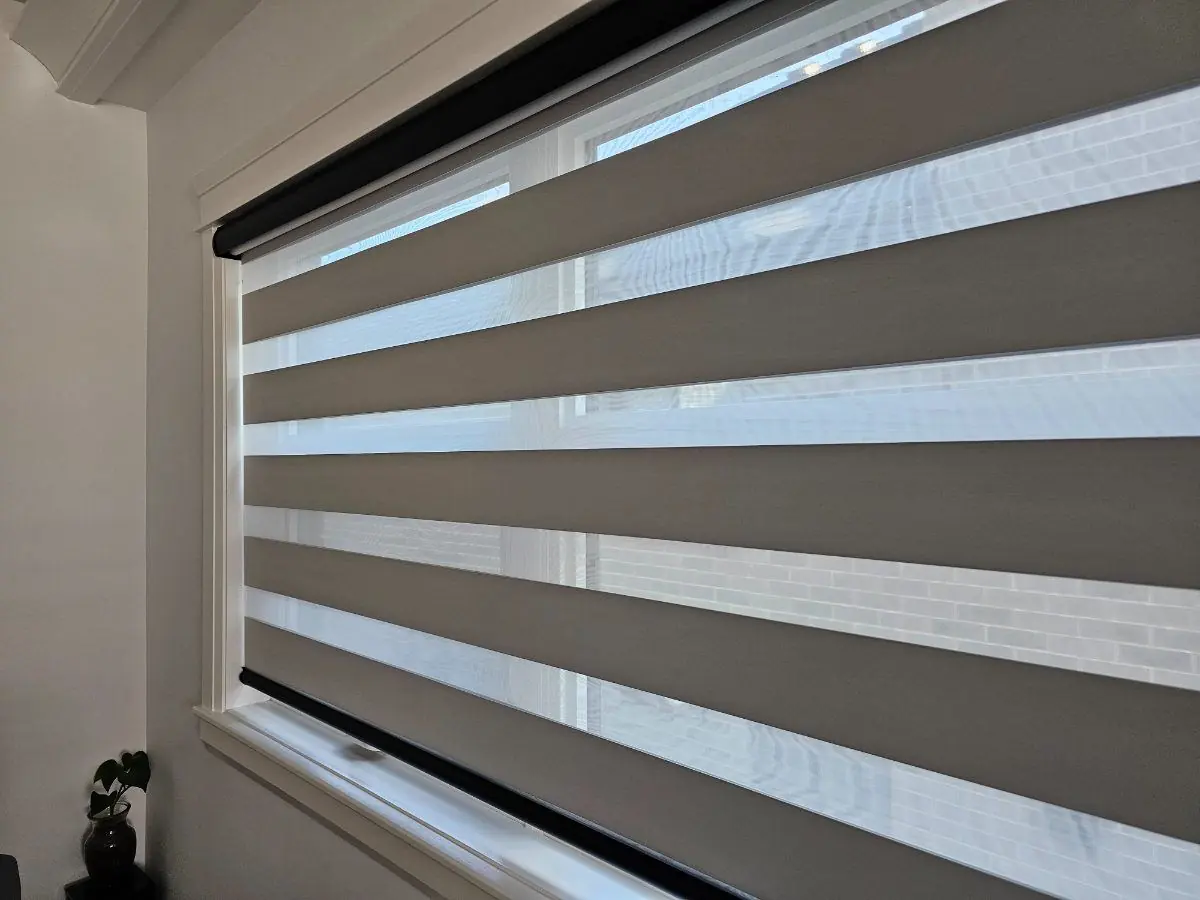
The pros
- Light control without lifting. Mornings, afternoons and evenings each need different light, and a zebra blind changes it in one movement while the blind stays down.
- Privacy day and night. Closed, the solid bands overlap and give full privacy, even with the lights on.
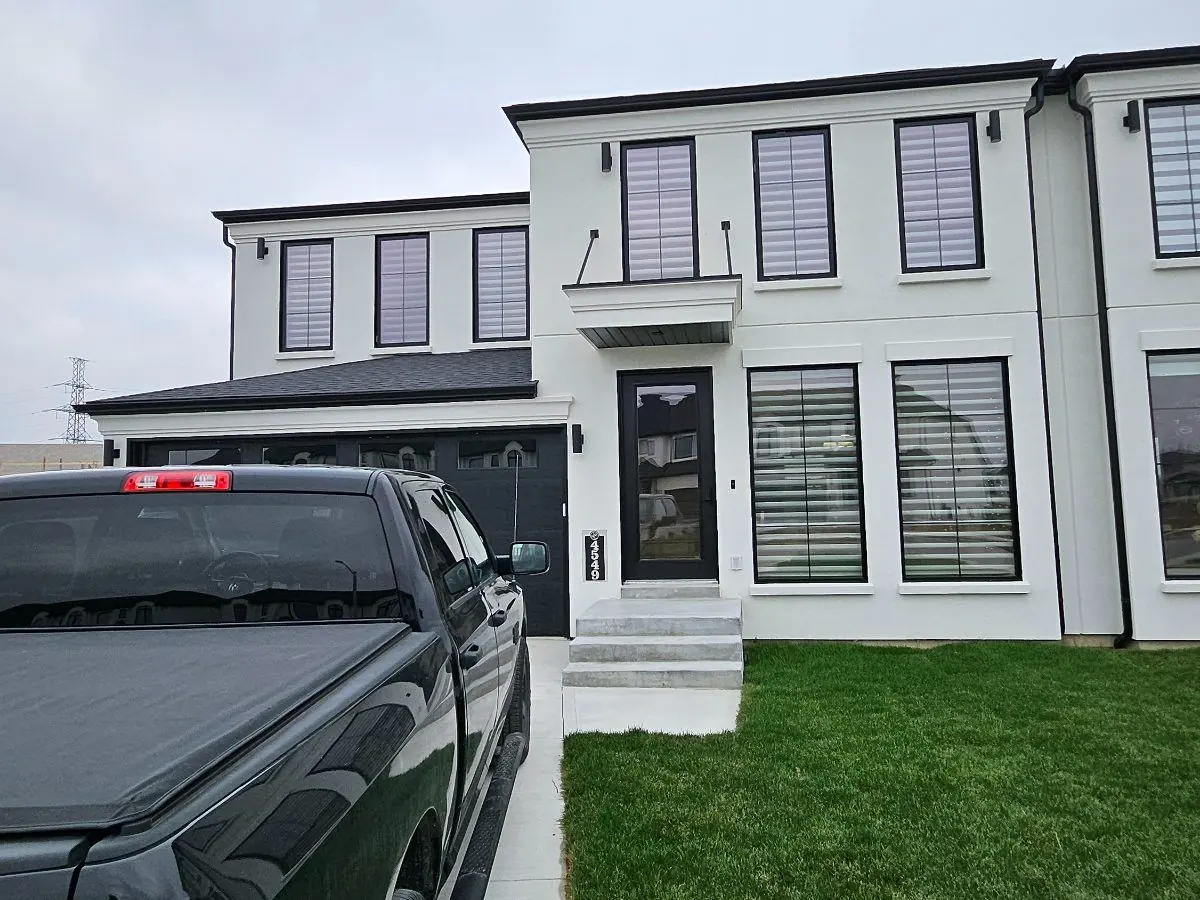
- A tidy, modern look. The fabric rolls into a cassette at the top, so there is no exposed roller. Fabrics range from crisp whites to textured linen looks and deep charcoal.
- Safe operation. Every zebra blind we install is cordless or motorized, or uses a chain system that meets Canada's cord rules. See child-safe blinds.
- Easy to live with. The fabrics are durable and a quick dust or wipe keeps them clean.
The cons
- Not blackout. Even room-darkening zebra fabrics let light through where the bands meet and around the sides. For a dark bedroom see blackout blinds.
- A softened view. When the sheer bands line up you look through two layers of sheer. It's pleasant and private, but if a clear view is the priority, a screen roller shade does it better.
- A bigger roll. Two layers of fabric make a fatter roll than a roller shade. On very tall windows the cassette is larger and sits a little lower across the top of the glass.
- Bands need to stay level. Wide blinds need a well-made clutch and careful installation so the bands line up across the whole width.
- Horizontal bands show dust. Not much, but more than a flat roller shade. A vacuum brush every few weeks handles it.
Where zebra blinds work best
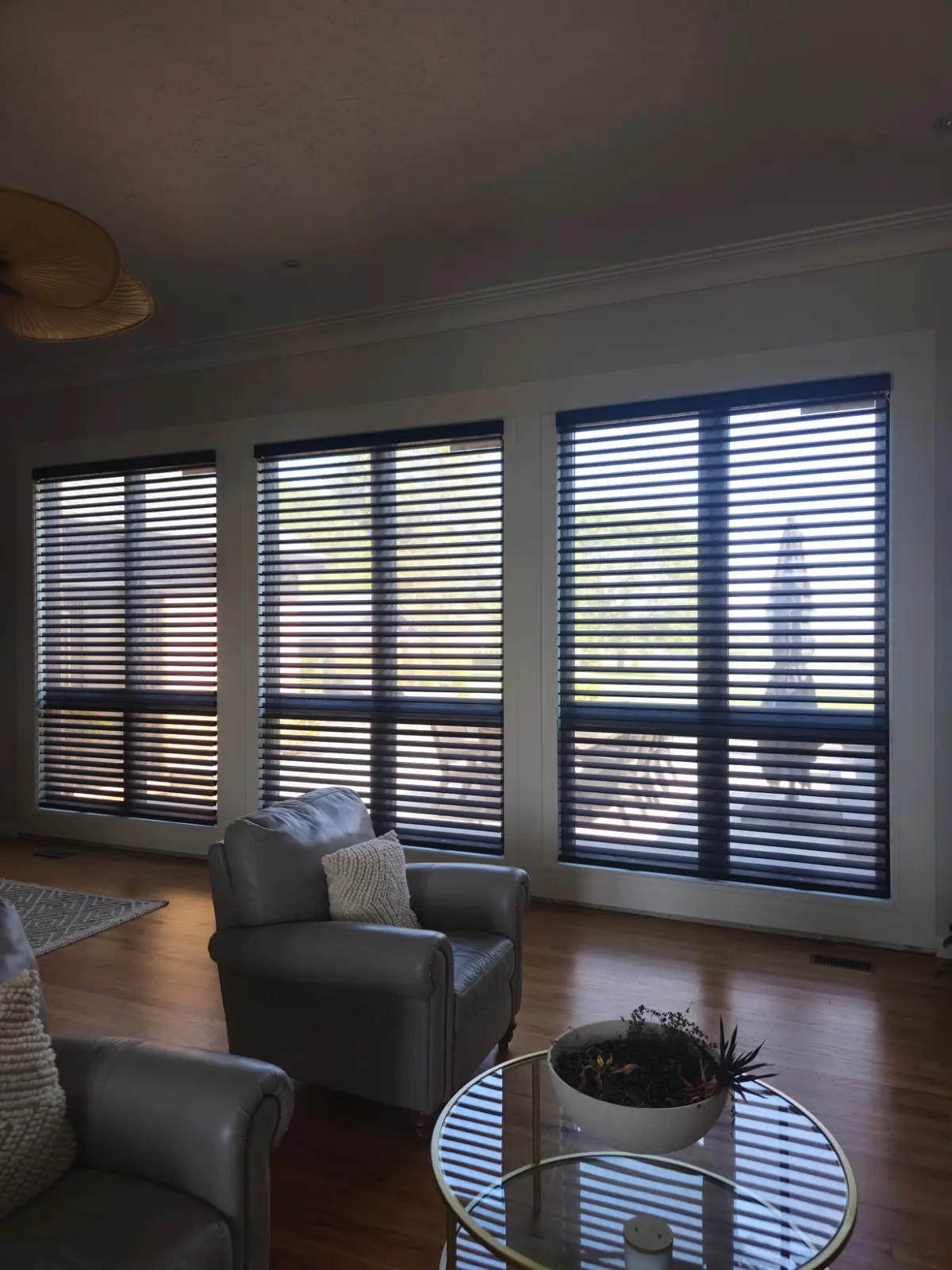
- Living and family rooms, where the light changes all day.
- Dining rooms and kitchens, where you want privacy at night without losing the room's brightness by day.
- Home offices with soft light, where glare isn't severe.
- Bedrooms, if you pair them with blackout drapery or accept a softer darkness.
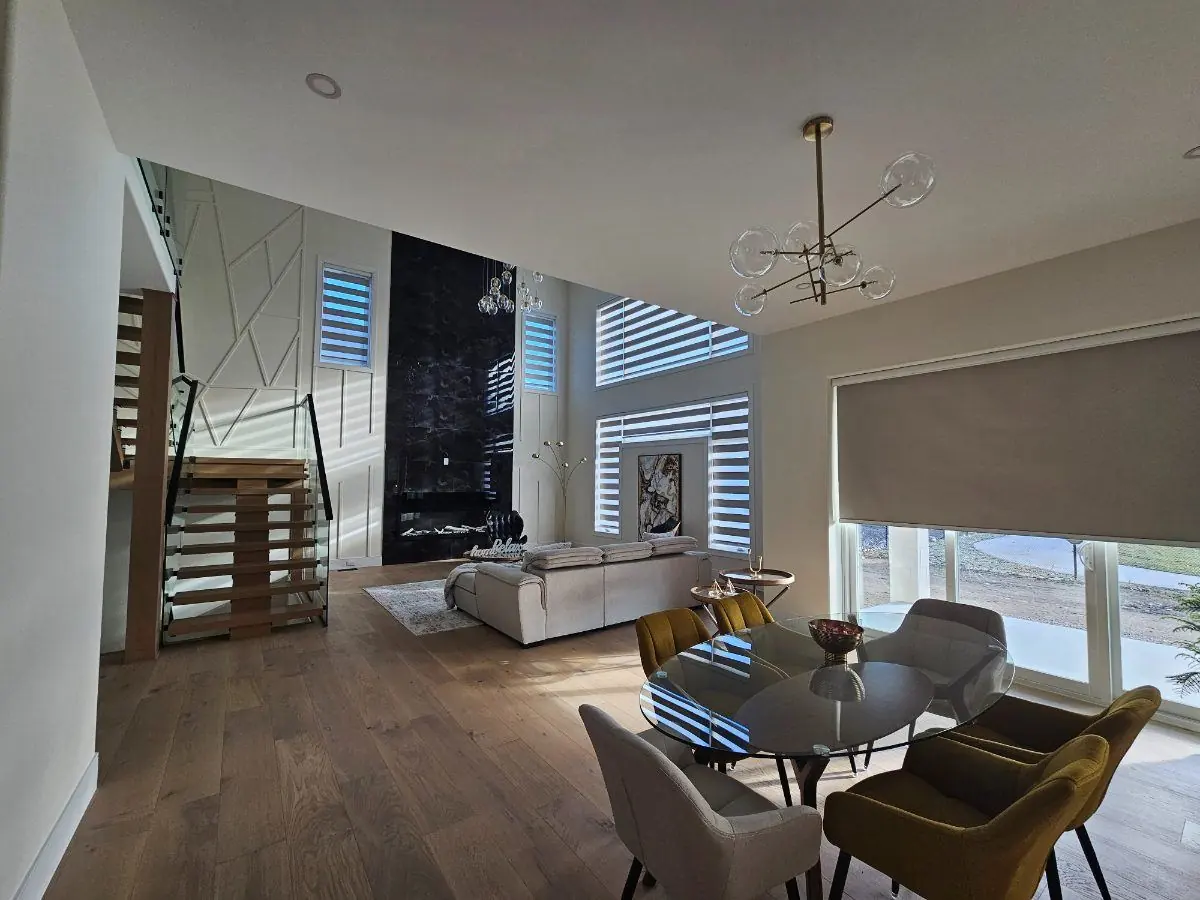
Where we'd suggest something else
- Nurseries and dark bedrooms: blackout roller or honeycomb shades.
- Lake and city views: screen shades. See our lakefront guide.
- Patio doors used all day: vertical sheers or drapery that open sideways. See patio door blinds.
Choosing fabric and colour
Light colours (white, ivory, linen) keep rooms bright and look soft from inside and out. Dark colours (black, charcoal) look graphic and modern and actually give a clearer view through the sheer bands, because your eye looks through a dark weave more easily. Room-darkening zebra fabrics have denser solid bands for bedrooms. Match the cassette to your window frames or trim so the blind looks built in.
Getting the size right
An inside mount sits within the frame and looks the neatest but leaves a small gap at each side. An outside mount overlaps the frame, blocks more light and suits shallow frames. Cassettes need a minimum depth for an inside mount, so we check every window during the free visit.
Motorized zebra blinds
A motor lines the bands up precisely every time, and most motors let you save a favourite position, such as the exact point where the bands give privacy but still let light in. Tall windows and two-storey rooms are where motorized zebra blinds make the most sense. See are motorized blinds worth it.
We motorize zebra blinds with smart motors that deliver 2 Nm of torque, enough for the zebra blinds in most homes. Every motor and its programming is covered by our full 3-year in-house warranty.
How dark does a closed zebra blind get?
It depends on the fabric. Standard zebra fabrics give privacy and a soft dimness when closed; room-darkening zebra fabrics have denser solid bands and get noticeably darker. Either way, thin lines of light show where the bands meet and along the sides. For most living rooms that's exactly right. For bedrooms that need real darkness, add blackout drapery or choose a blackout roller shade.
Fabrics that suit busy homes
- Kitchens: smooth, easy-wipe fabrics in mid-tones that hide marks.
- Homes with pets: tighter weaves that resist snags.
- Sunny rooms: lighter colours, which show the least change over the years.
Common questions
Are zebra blinds out of style?
No. They remain one of the most requested window coverings we install, and newer fabrics with texture and wider bands keep them looking current.
Are zebra blinds good for bedrooms?
They give full privacy but not full darkness. Choose a room-darkening fabric and add blackout drapery, or use a blackout roller shade instead if darkness is the priority.
What is the difference between zebra blinds and triple shades?
Zebra blinds use flat sheer and solid bands. Triple shades suspend soft fabric vanes between two sheers, which gives a softer, more diffused light. See triple shades explained.
Can I motorize zebra blinds later?
It is easiest to order them motorized, because the motor sits inside the roller tube. Converting later depends on the blind, so if you think you might want motors, tell us at the visit.