Honeycomb Shades and a More Comfortable Home
Honeycomb shades, also called cellular shades, are what we suggest most often when a room feels cold by the glass in January or hot by four o'clock in July.
In short
- The hexagon-shaped cells hold a layer of still air between the window and the room.
- Double-cell shades insulate more than single-cell. Blackout versions add a lining inside each cell.
- Top-down/bottom-up shades give privacy at street level and daylight up top.
- Fit counts: the closer the shade sits to the frame, the more it helps.
On this page
Why the cells make the difference
Seen from the side, a honeycomb shade is a stack of hexagon-shaped cells, like a honeycomb. Each cell traps a pocket of air. Still air is a decent insulator, so the shade adds a layer between the cold (or hot) glass and the room.
In winter that means less heat lost through the window and less of that chilly draft you feel when you sit near it. In summer it means less of the sun's heat reaching the room. In energy testing, cellular shades consistently rank among the most insulating window coverings you can buy.
Single cell, double cell and cell size
- Single cell: one row of cells. Lighter, slimmer when raised and a good fit for most rooms.
- Double cell: two rows of cells for an extra layer of air. Worth it on large windows, older single-pane or drafty windows, and rooms that are hard to heat.
- Cell size: larger cells look bolder on big windows; smaller cells look tidier on small windows and stack more compactly.
Light-filtering or blackout
Light-filtering honeycomb gives an even, soft glow and full daytime privacy. Blackout honeycomb has a lining inside each cell, so the fabric itself stops the light. Like every shade, a little light still finds the gap between the shade and the frame, which is why we measure blackout honeycomb carefully and sometimes suggest an outside mount for bedrooms.
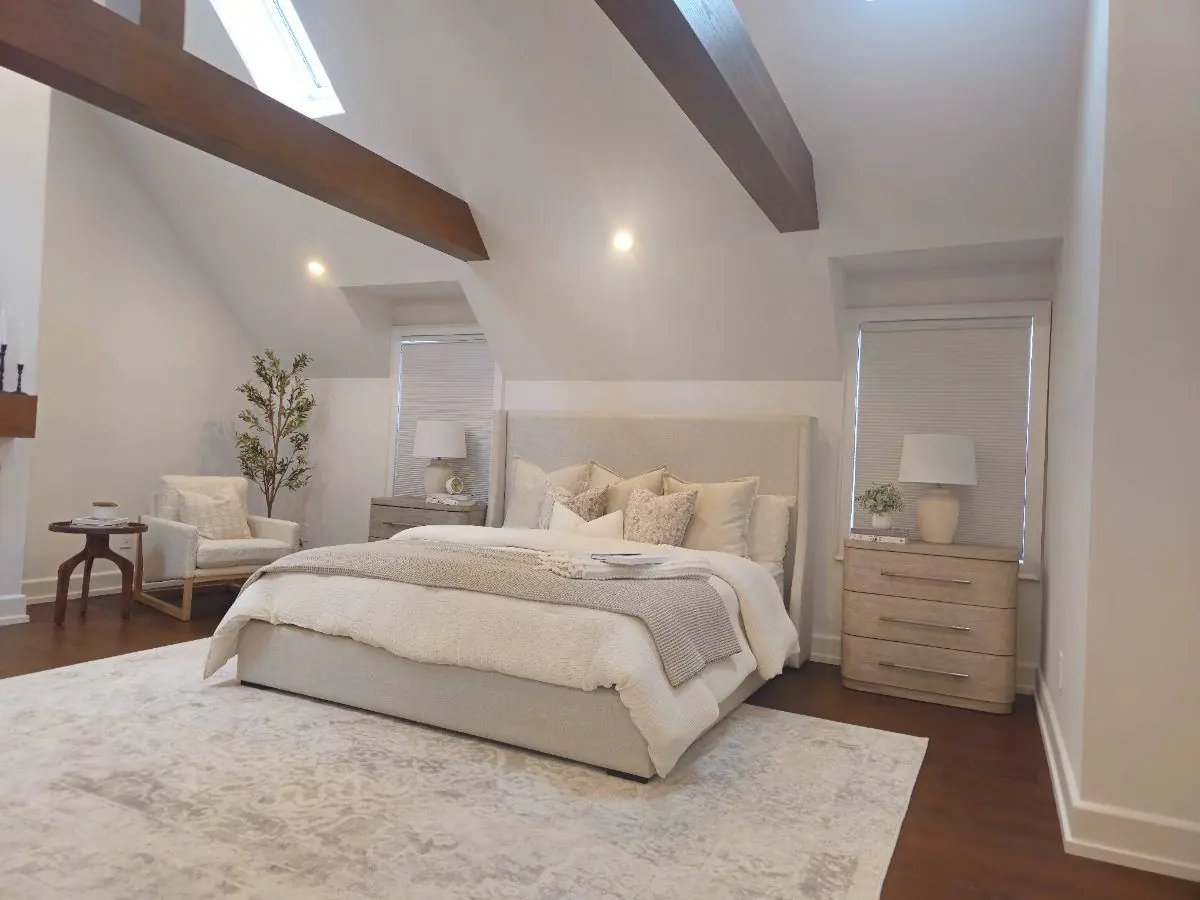
Top-down/bottom-up
This option lets you lower the shade from the top as well as raise it from the bottom. Drop the top a third of the way and you get daylight and sky while the lower part of the window stays covered. It is the simplest fix we know for street-facing bedrooms, bathrooms and any room where a neighbour can see in. More ideas in privacy without losing daylight.
Rooms where honeycomb pays off
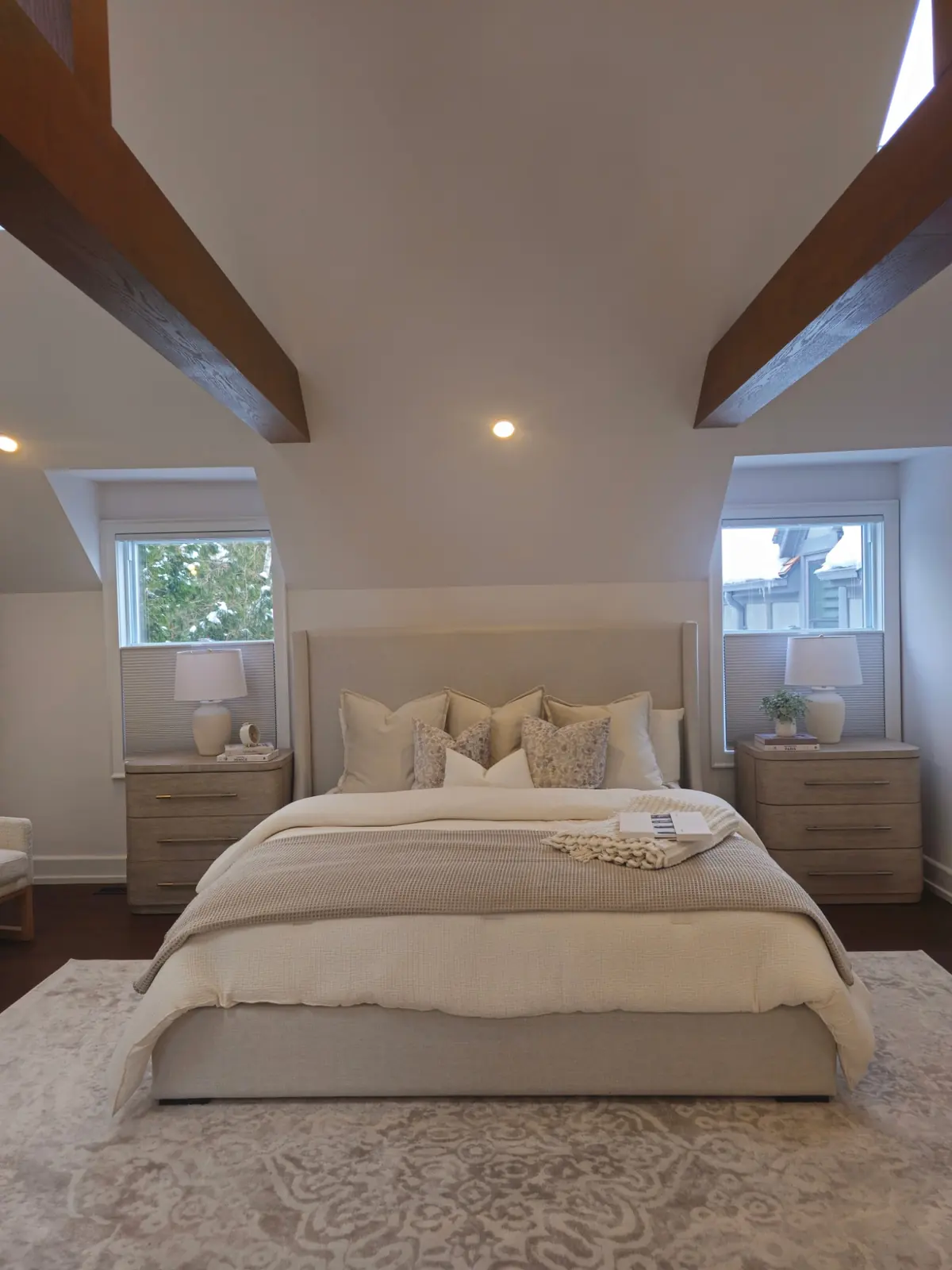
- Bedrooms that feel cold near the window in winter.
- South- and west-facing rooms that overheat in the afternoon. See shades for south- and west-facing windows.
- Older homes with original or drafty windows, common in parts of Windsor and Chatham-Kent.
- Basements, where windows are small and rooms run cool.
- Nurseries, where you want insulation, darkness and no cords.
Getting the fit right
An inside mount sits within the window frame and looks the tidiest, but it needs enough frame depth for the headrail. An outside mount covers the frame and overlaps the wall, which seals the edges better and blocks more light. We check depth and squareness at every window during the free visit and recommend the mount that works best for that window.
Cordless and motorized
Every honeycomb shade we install is cordless or motorized. Cordless shades lift by hand from the bottom rail. Motorized shades can close automatically at sunset in winter to hold heat in, and on hot afternoons in summer to keep it out, which is when they do the most good. See choosing a motor.
We motorize honeycomb shades with smart motors that deliver 2 Nm of torque. Every motor and its programming is covered by our full 3-year in-house warranty.
Choosing a colour
Light colours (white, ivory, light grey) reflect the most summer heat and look calm from the street. Mid-tones hide dust and fingerprints better. Darker colours look rich from inside but absorb more heat unless the fabric has a light back, so on south- and west-facing windows we usually suggest a light colour or a light-backed fabric.
Common questions
Do honeycomb shades really save energy?
They reduce heat loss and heat gain through the glass. How much you notice depends on the window, how well the shade fits, and whether it is lowered at the right times: closed on winter nights and hot summer afternoons.
Can you see through honeycomb shades?
Not through light-filtering or blackout fabric. Light-filtering cells give privacy day and night, though strong light behind them can show soft shapes. Blackout cells show nothing.
How do I clean them?
Dust them with a soft brush or a vacuum on low. To clear dust inside the cells, blow cool air through them with a hair dryer. Spot-clean marks with a damp cloth; never soak the fabric.
Are honeycomb shades good for patio doors?
They can be, mounted above the door so they clear the handle, but vertical sheers or drapery are usually easier for doors you use all day.