Zebra Blinds or Roller Shades: Which Suits Your Room?
They look alike when they are rolled up, and both sit neatly in a window frame. Once they come down they behave very differently, and that difference decides which one belongs in each room.
In short
- Zebra blinds change the light without raising the blind: slide the bands from open view to privacy.
- A roller shade is one layer of fabric, so the fabric you choose (screen, light-filtering or blackout) sets the light.
- For a properly dark bedroom, a blackout roller shade beats a zebra blind.
- Living areas usually suit zebra blinds. Bedrooms, media rooms and big views usually suit roller shades.
On this page
How a zebra blind works
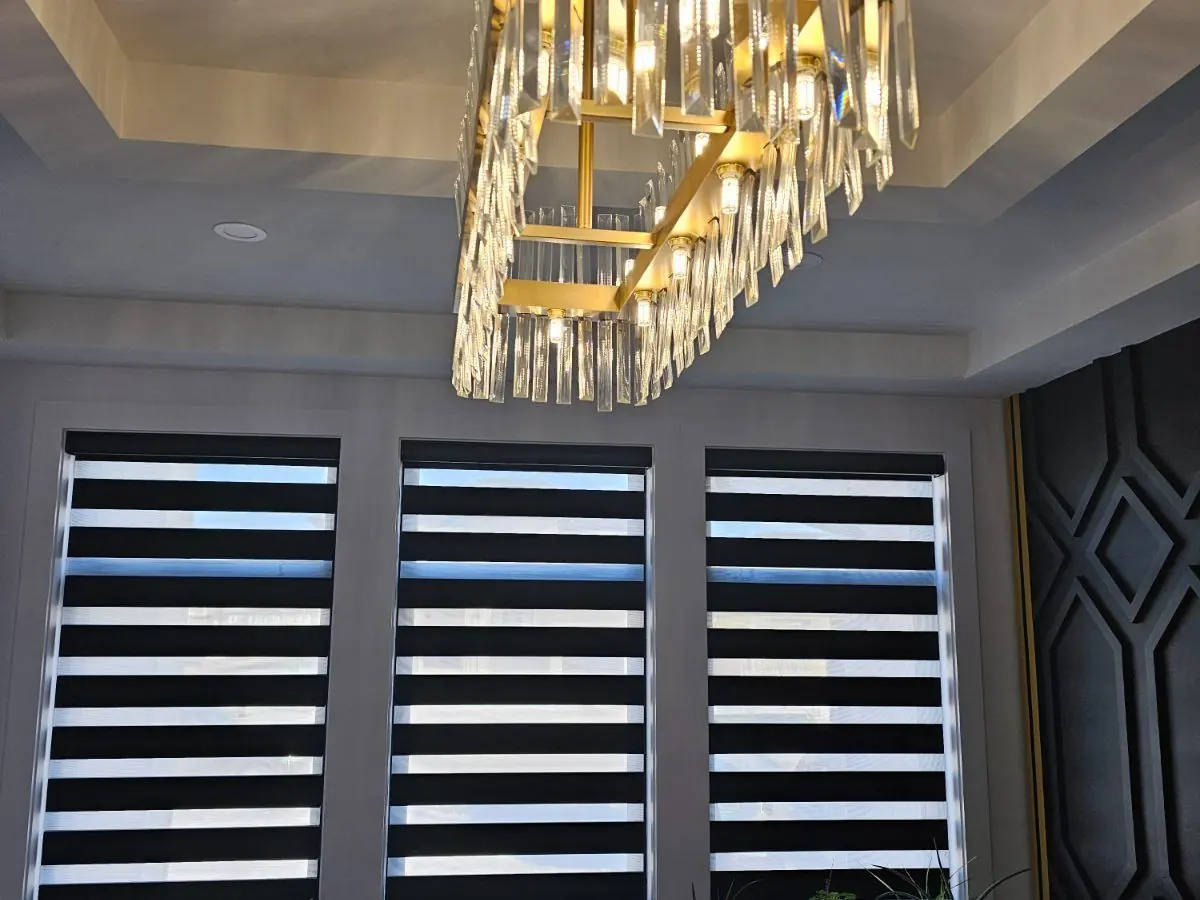
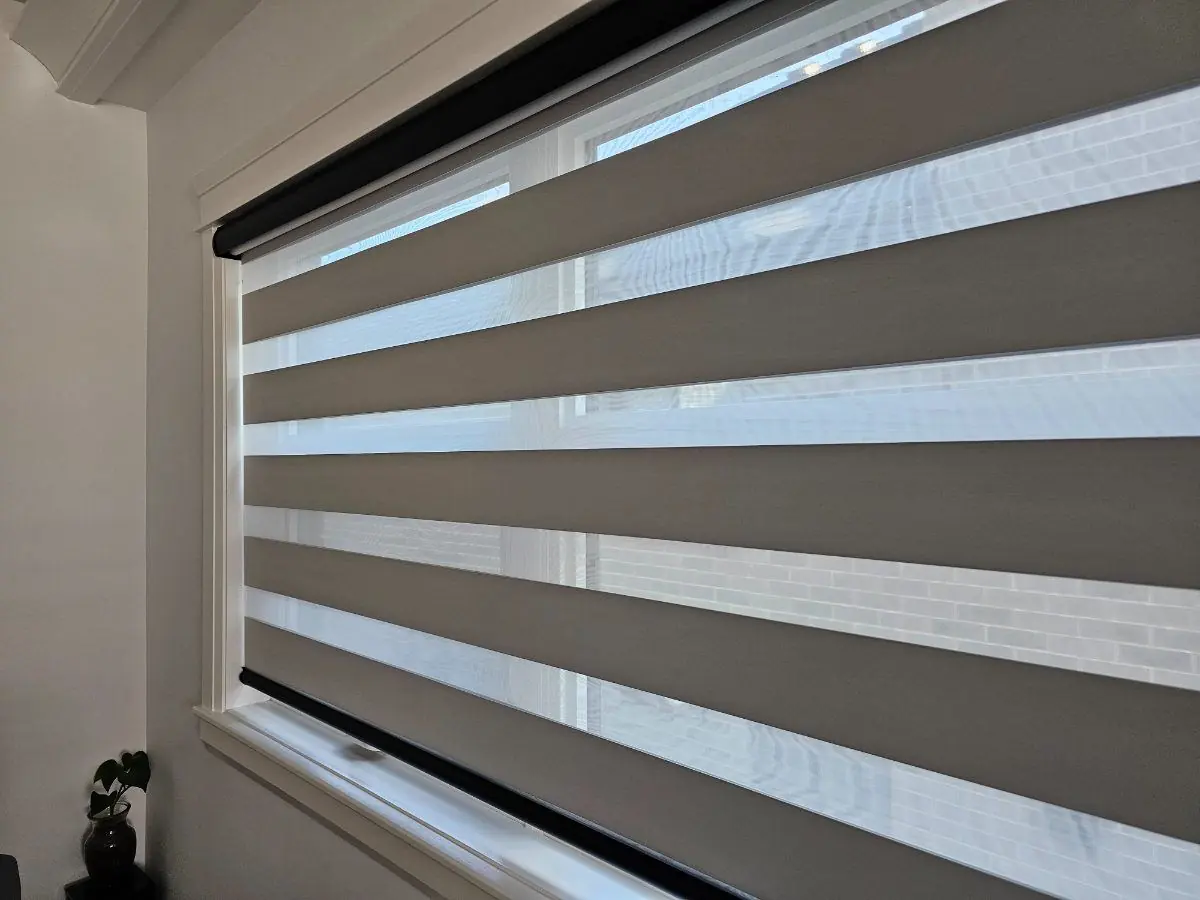
A zebra blind (also sold as a dual shade, day-and-night shade or banded shade) is one long loop of fabric with alternating sheer and solid horizontal bands. The loop runs down the front of the blind and back up behind it, so there are always two layers in front of the glass.
When the sheer bands line up, you look through two sheer layers and get a soft, screened view. Move the fabric a few centimetres and the solid bands slide over the sheer ones, closing the blind for privacy. You change the light without changing the height of the blind, which is why people who adjust their blinds several times a day tend to love them.
How a roller shade works
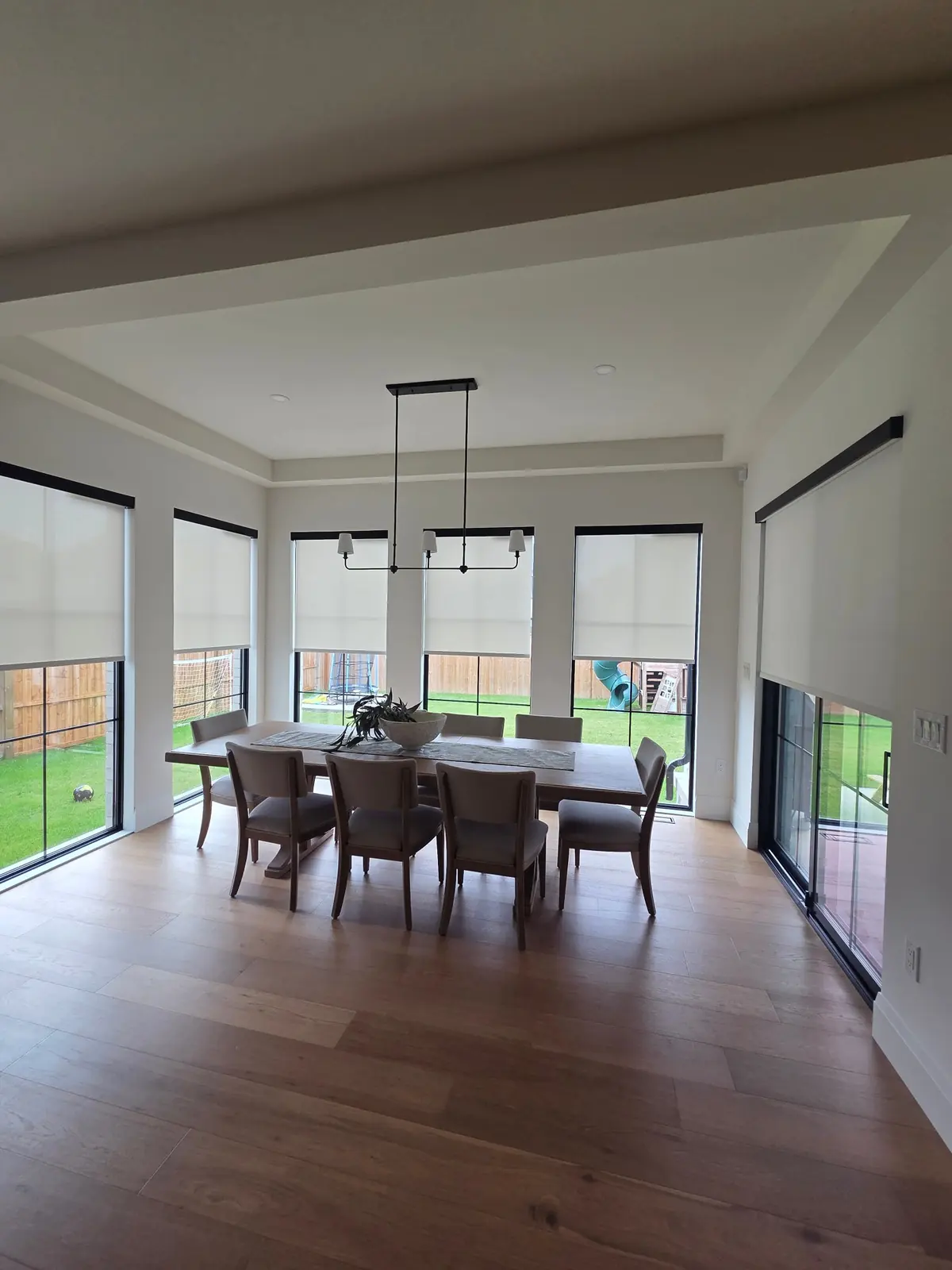
A roller shade is a single piece of fabric on a tube. It is up, down or somewhere in between, and the fabric does the work:
- Screen (sun) fabrics cut glare and heat while keeping the view.
- Light-filtering fabrics soften the room and give daytime privacy, but you can't see out.
- Blackout fabrics stop light coming through the fabric itself.
Because there is only one layer, a roller shade rolls up smaller than a zebra blind and handles very wide or very tall windows well. Our guide to roller shade fabrics explains openness and colour in detail.
Side by side
| Zebra blinds | Roller shades | |
|---|---|---|
| Change light without raising | Yes | No |
| View when lowered | Through the sheer bands | With screen fabric only |
| Full blackout | No, light passes at the band edges | Yes, with blackout fabric and a close fit |
| Privacy at night | Good when closed | Good with light-filtering or blackout fabric |
| Size when rolled up | Larger (two layers) | Smaller |
| Look | Graphic, modern stripes | Clean and minimal |
| Motorized option | Yes | Yes |
Which one for each room
- Living and family rooms: zebra blinds. The light changes all day, and you can tune it without losing the room's brightness.
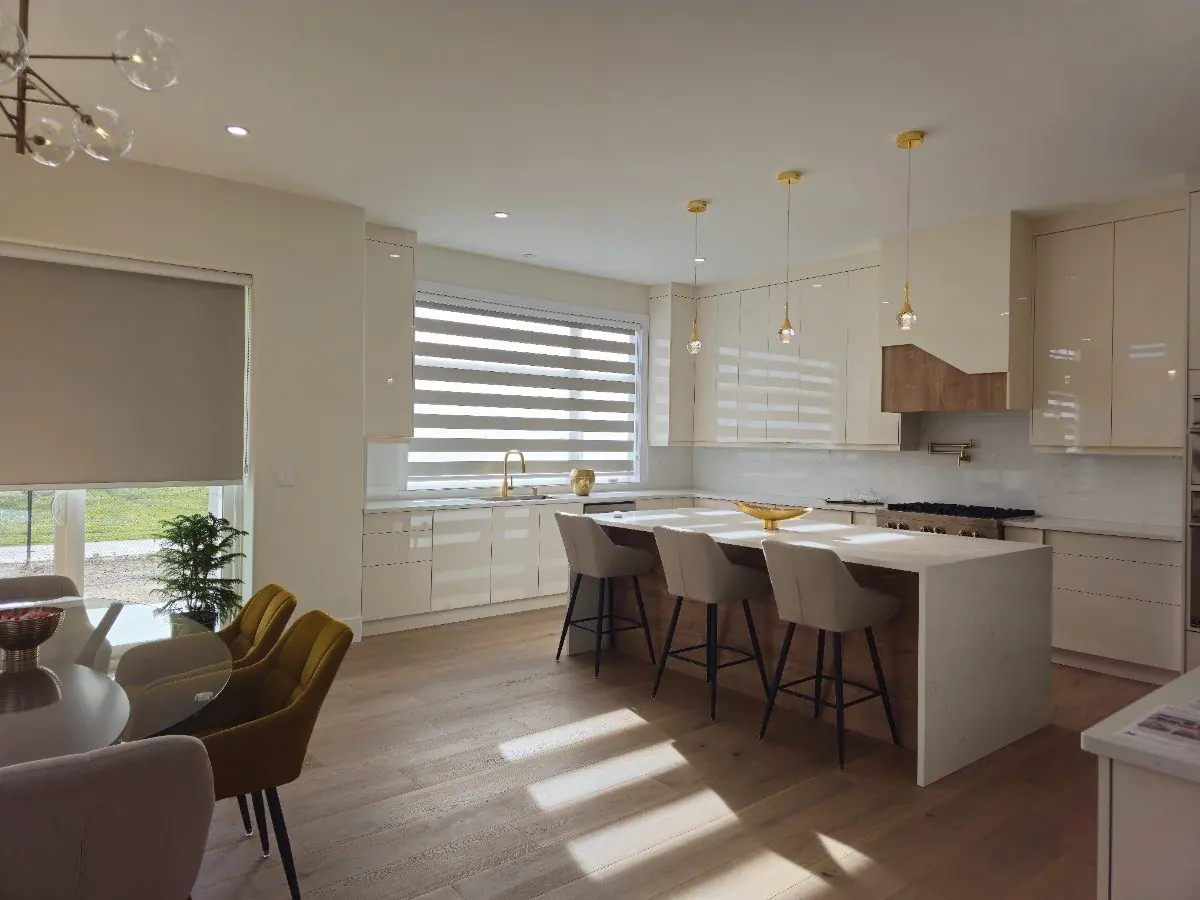
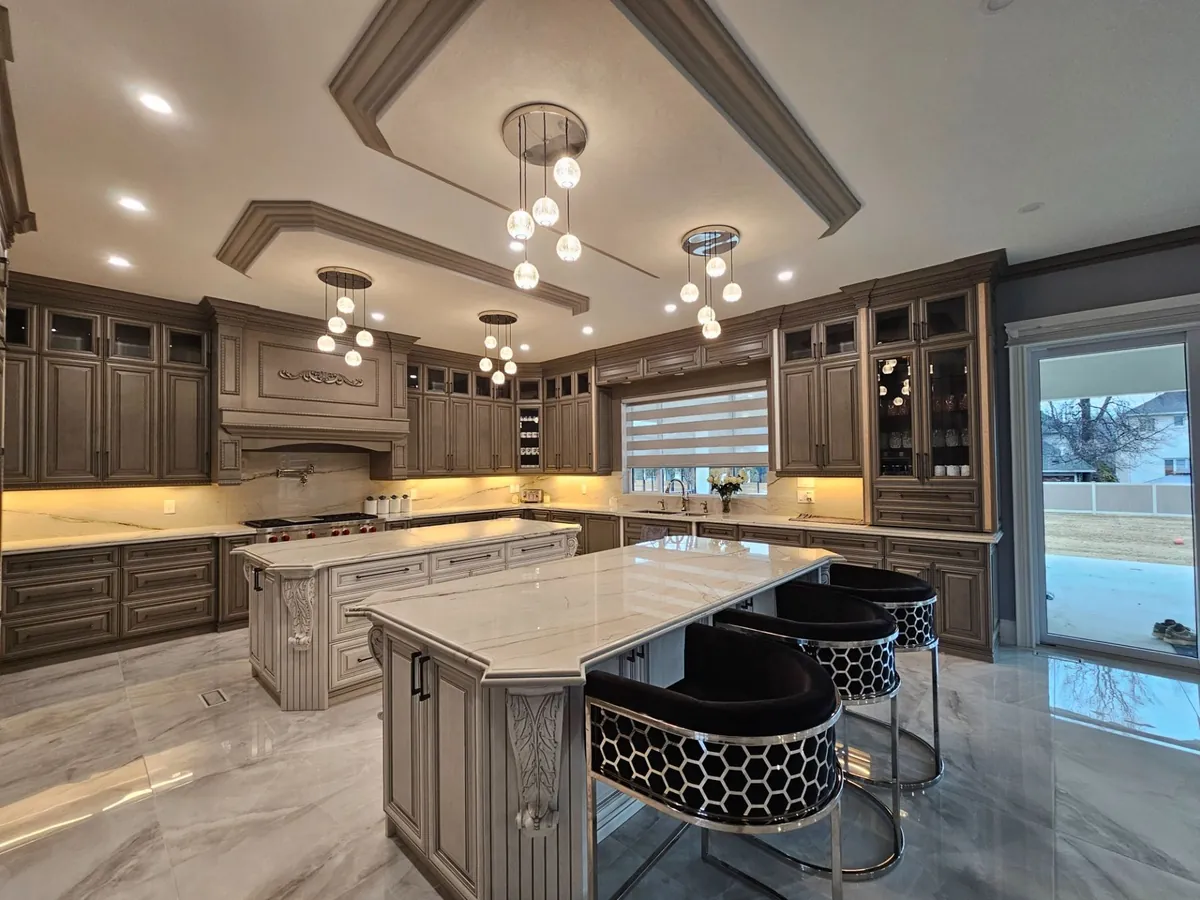
- Kitchens: either. A zebra blind over the sink keeps some privacy at night; a screen roller shade keeps the backyard view clear.
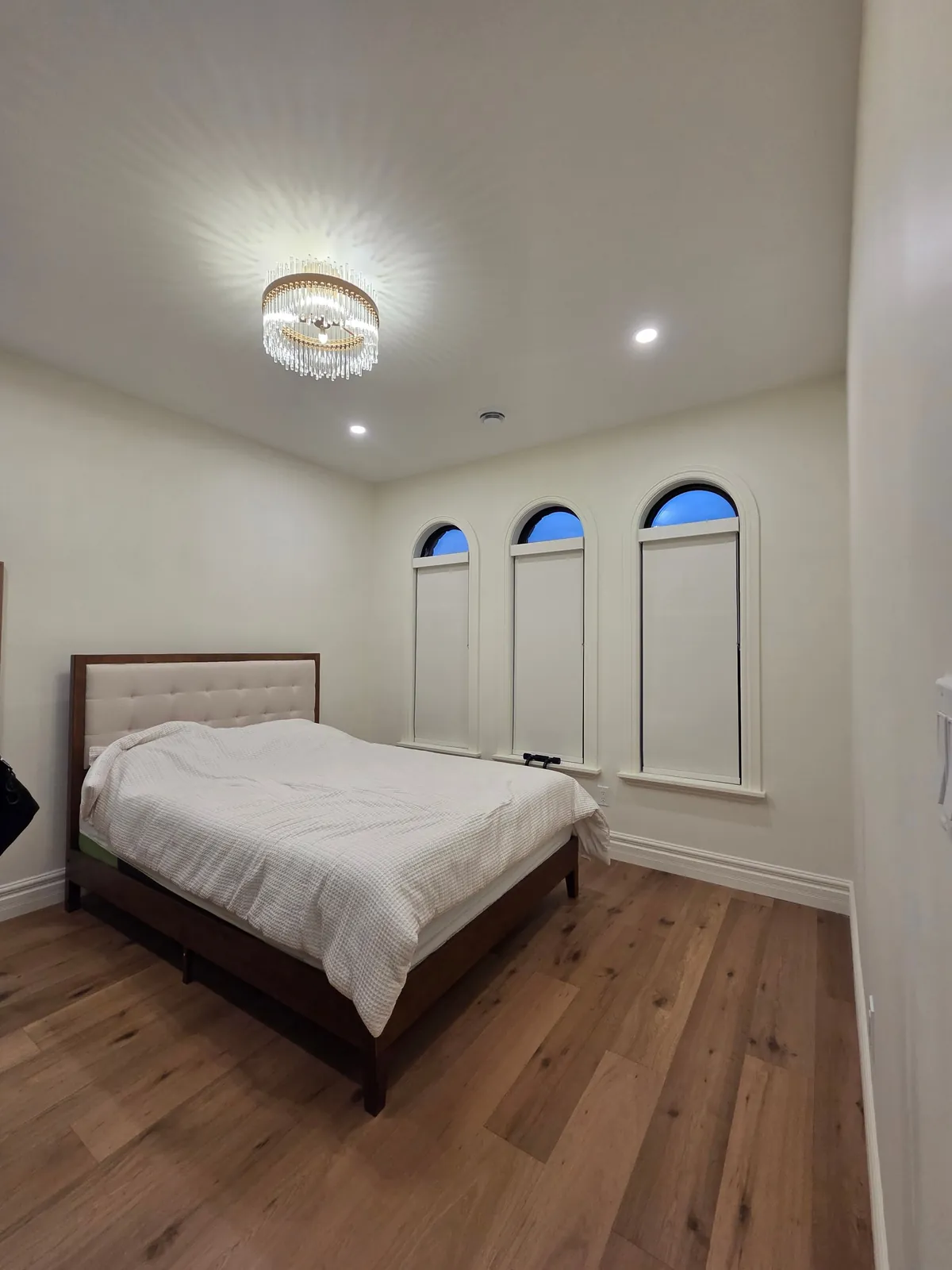
- Bedrooms and nurseries: blackout roller shades, ideally in a cassette with side channels if you need the room properly dark. See blackout blinds for bedrooms.
- Home offices: screen roller shades, which stop glare on monitors without closing the room in.
- Lake views and big picture windows: screen roller shades, often motorized. Our lakefront guide covers the extra glare off the water.
- Two-storey and open-to-above windows: either one, motorized, so every shade moves together and nobody reaches for a pole.
What about cost?
We don't publish a price list because every blind is made to measure, but the same things drive the price of both: the size of the window, the fabric collection, the cassette or headrail, and whether it is motorized. A zebra blind uses roughly twice the fabric of a roller shade the same size, because the fabric runs down the front and back up behind, so in the same collection a zebra blind usually costs a little more. Your quote from the free visit lists each window, so you can compare the two side by side.
Using both in one home
Most of the homes we work in end up with a mix. A common plan is zebra blinds through the main living areas, blackout roller shades in the bedrooms and a screen roller shade on the patio door. Choosing the same cassette colour for all of them makes different products read as one design.
Motorized zebra or motorized roller?
Both motorize well. A motorized zebra blind can save a favourite position where the bands give privacy with light, while a motorized roller shade is the simplest and quietest choice for large windows. We use smart motors with 2 Nm of torque for both. Every motor and its programming is covered by our full 3-year in-house warranty.
How they hold up over time
Both are durable. Roller shades have one layer and a simpler mechanism, so there is a little less to adjust. Zebra blinds rely on the bands staying level, which is why careful measuring and installation are important. Choose the product that suits how you use the room; either will last for years with normal care.
Common questions
Are zebra blinds blackout?
No. Even with a room-darkening fabric, light passes at the edges of the bands and around the blind. For a dark bedroom choose a blackout roller shade, or layer blackout drapery over the zebra blind.
Which is easier to clean?
Roller shades, slightly, because there is one smooth surface. Zebra blinds clean the same way but have two layers, so lower them fully and dust both. Our cleaning guide goes product by product.
Can zebra blinds and roller shades run on the same motor system?
Yes. Both can use the same family of motors, so one remote, app or scene can run every window in the room.
Which is better for a large picture window?
Usually a roller shade, often motorized. It rolls up smaller, handles wide windows well and keeps the view with a screen fabric.