Ripple-Fold, Pinch-Pleat or Sheer: Choosing Curtain Styles
The top of a curtain, called the heading, decides how the fabric falls when it is closed and how much room it takes up when it is open. Choose the heading first and the rest gets easier.
In short
- Ripple-fold hangs in even, soft waves on a track. It looks modern and suits motorized curtains best.
- Pinch-pleat is gathered into tailored pleats. It looks more formal and classic.
- Sheers soften daylight and give daytime privacy, but you can see through them at night.
- Mount the track high and wide so the curtains frame the window instead of covering it.
On this page
Ripple-fold
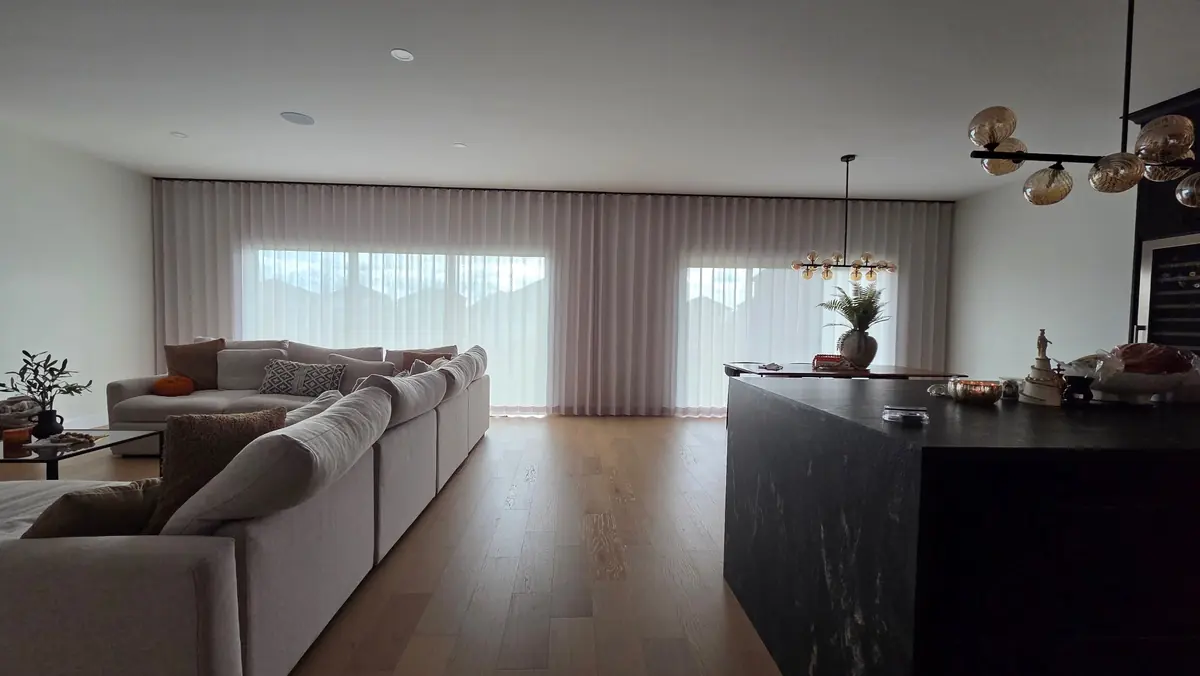
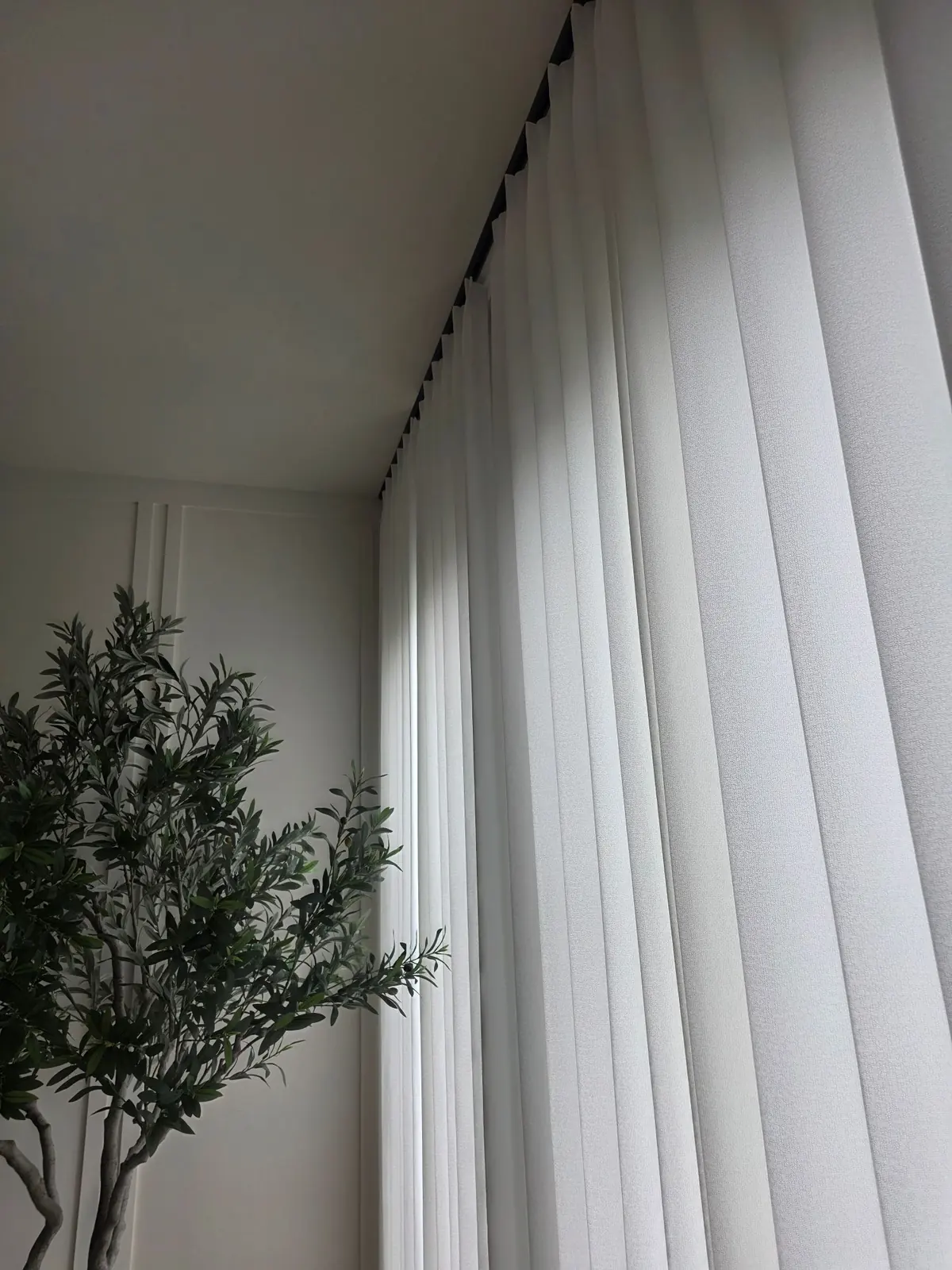
Ripple-fold curtains hang from small carriers that glide in a track. Snap tape on the back of the fabric spaces the carriers evenly, so the curtain falls in the same soft S-shaped wave from end to end, whether it is open or closed.
Ripple-fold looks clean and modern, stacks neatly to the side and moves very smoothly, which is why it is the heading we recommend for motorized curtains. It can be made fuller or flatter; fuller ripples look richer, flatter ripples look more minimal and use less fabric.
Pinch-pleat
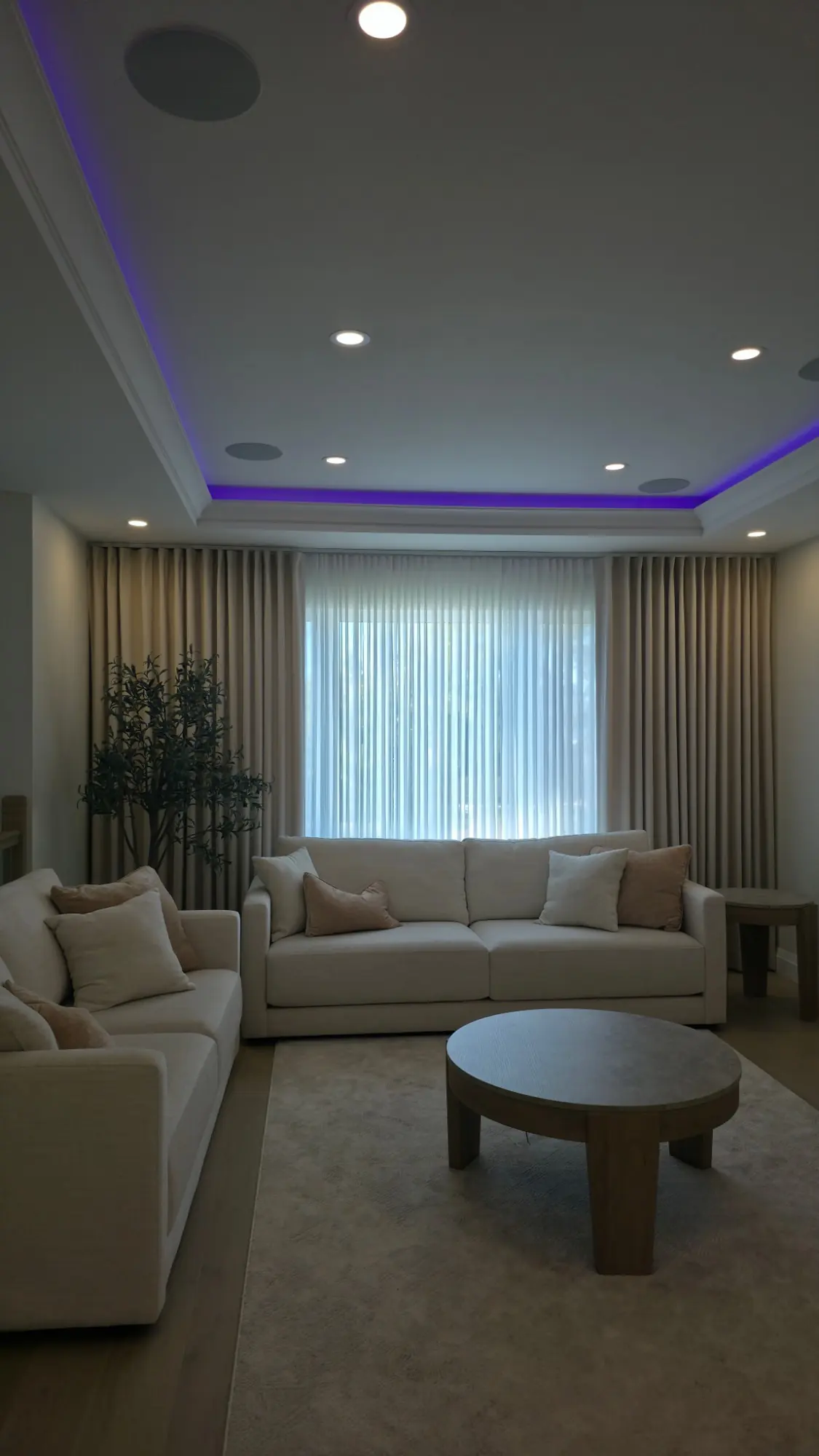
Pinch-pleat curtains are gathered at the top into tailored groups of folds (double or triple pinches) sewn at regular spacing. Below the pleats the fabric falls in deeper, more structured folds. The look is more traditional and formal, and it suits dining rooms, bedrooms and homes with classic trim and mouldings.
Pinch-pleat drapery is usually made with about two to two-and-a-half times the width of the window in fabric, so it looks full even when closed. It can hang from rings on a decorative rod or from hooks on a track.
Sheers
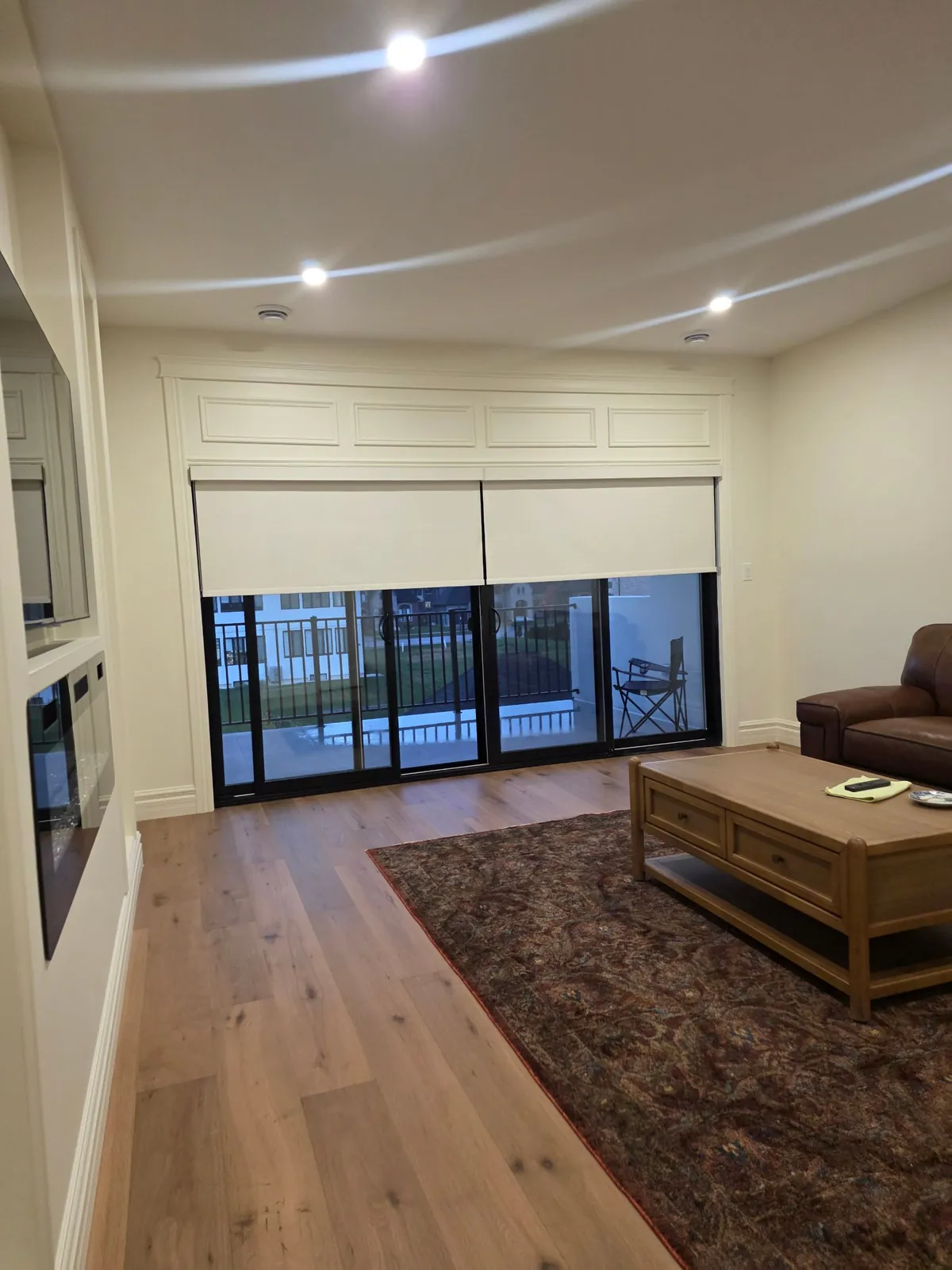
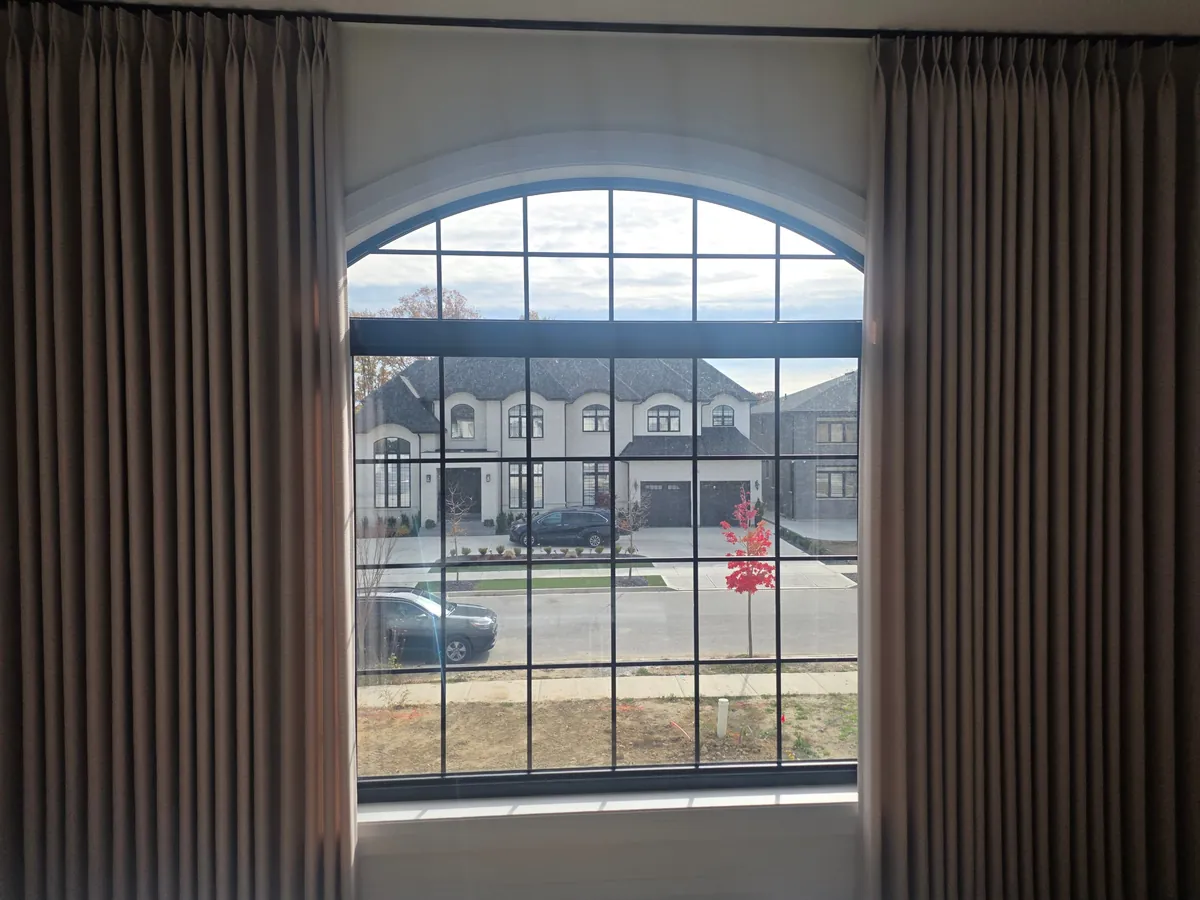
Sheers are lightweight, see-through fabrics. They soften harsh daylight, cut glare and give daytime privacy because it is brighter outside than in. At night, with the lights on, people outside can see through them. That is why sheers are usually paired with a second layer: a blackout curtain or a roller shade. See layering sheers with blackout.
Linings
- Unlined: light and airy, lets the fabric's colour glow when the sun is behind it.
- Privacy lining: stops silhouettes and protects the fabric from fading.
- Blackout lining: turns any decorative curtain into a blackout curtain.
- Thermal lining: adds weight and a bit of insulation, useful on cold Ontario nights.
Tracks or rods?
Rods show; tracks mostly disappear. A ceiling-mounted track lets the curtain start right at the ceiling, which makes the room feel taller and stops light spilling over the top. Tracks can also bend around bay windows and corners, and they are the only option for motorized curtains. Decorative rods suit pinch-pleat drapery on rings when you want the hardware to be part of the look.
Measuring and mounting tips
- Mount high. Put the track close to the ceiling rather than just above the window frame. Ceilings look taller and the window looks larger.
- Mount wide. Extend the track past the frame on both sides so the open curtains stack on the wall, not over the glass. Pleated curtains need roughly a third of the track width to stack; ripple-fold stacks tighter.
- Choose the length. Curtains can kiss the floor, float about a centimetre above it (easiest to keep clean, best for motorized tracks) or puddle on the floor for a softer, formal look.
- Plan the layers. If you want two layers, plan a double track from the start.
Which heading suits which room
| Room | Our usual pick | Why |
|---|---|---|
| Open-concept living | Ripple-fold sheers | Long runs of glass, modern look, easy to motorize |
| Formal dining | Pinch-pleat | Tailored folds that suit classic trim |
| Bedroom | Ripple-fold or pinch-pleat with blackout lining | Darkness at night |
| Home office | Pinch-pleat or ripple-fold sheer | Soft light without screen glare |
| Patio door | Ripple-fold on a track | Glides clear of the door and stacks tight |
Motorized curtain tracks
Ripple-fold curtains on a motorized track open and close at the touch of a button, on a schedule or by voice. The motor sits at one end of the track and pulls the curtain on a hidden belt, so the fabric glides evenly every time. We install motorized tracks for every curtain style we sell. Every motor and its programming is covered by our full 3-year in-house warranty. See motorized curtains.
Common questions
Which curtain style is best for motorized tracks?
Ripple-fold. The fabric is spaced evenly on carriers, so the motor pulls it smoothly and it stacks the same way every time.
How far past the window should a curtain track go?
Far enough that the curtains stack beside the glass when they are open. As a rough guide, pleated curtains need about a third of the track width to stack; we work out the exact number at the measure.
Can sheer curtains give privacy at night?
Not on their own. With lights on inside, people can see through sheers after dark. Pair them with a blackout curtain or a roller shade behind.
Can pinch-pleat curtains be motorized?
Yes, on the right track and carriers, although ripple-fold glides most evenly. We recommend the best combination for your fabric and window.