Window Treatments for Lakefront Homes in Essex County
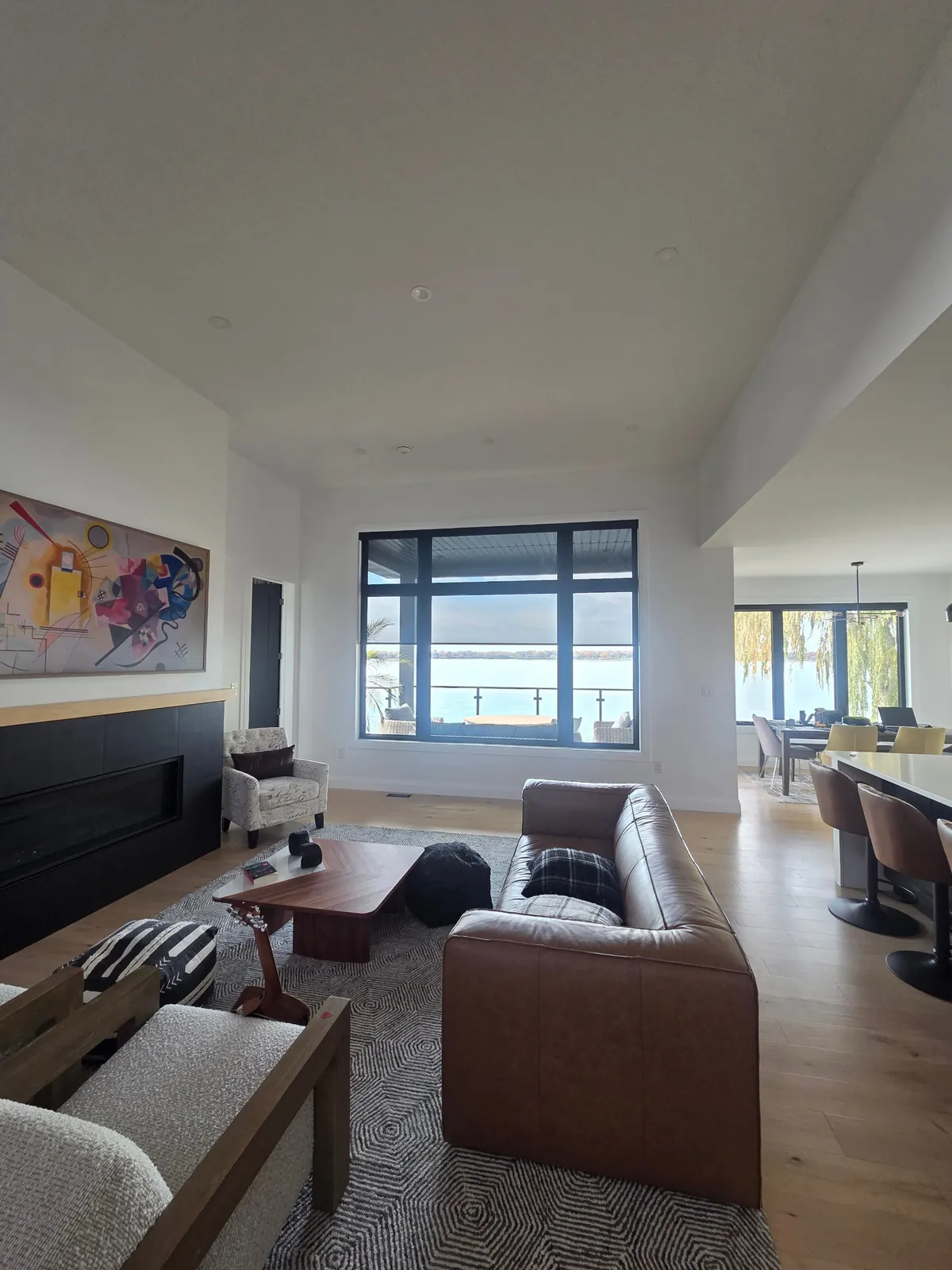
On the water, the view is the reason you bought the house. A window covering there has one job: tame the glare and heat without hiding the lake.
In short
- Water reflects sunlight up into the room, so lakefront glare comes from two directions.
- Lake Erie homes in Kingsville, Leamington and Harrow look south into the sun; Lake St. Clair homes in Lakeshore and Belle River look north.
- Screen shades with a low openness factor in a darker colour keep the clearest view.
- Motorized shades make long walls of glass easy to live with.
On this page
- Glare from the sky and the water
- Which way does your shoreline face?
- Screen shades keep the view and lose the glare
- Protecting floors, furniture and art
- Big glass, motorized
- Cottages and seasonal homes
- Breezy days and open windows
- Let the shades follow the sun
- What we usually recommend on the water
- Common questions
Glare from the sky and the water
Calm water works like a mirror. On a sunny afternoon you get direct sun through the glass plus light bouncing off the lake and up into the room, onto ceilings, TV screens and faces. That's why lakefront rooms can feel too bright even when the sun isn't shining straight in, and why ordinary light-filtering fabric, which blocks the view, is the wrong answer for most of them.
Which way does your shoreline face?
It's the most useful question for any waterfront home in Essex County.
- Lake Erie (Kingsville, Leamington, Wheatley, Harrow and Colchester): the lake is to the south. Lake-facing windows get sun most of the day, all year, and the low winter sun reaches deep into rooms. Expect the strongest heat and glare and plan screen shades for every lake-facing window.
- Lake St. Clair (Lakeshore, Belle River and the Tecumseh shoreline): the lake is to the north. Lake-facing windows get softer, indirect light, but west-facing glass catches strong evening sun across the water in summer. Start with the west side.
- Detroit River (LaSalle and Amherstburg): the river is to the west, so waterfront windows face the afternoon and evening sun. Treat them like west-facing windows anywhere, with extra reflected glare.
Screen shades keep the view and lose the glare
Screen fabrics are woven with tiny openings. The openness factor tells you how open the weave is:
- 1%: the most glare and heat control, with a slightly softer view. Best for south-facing Lake Erie glass.
- 3%: the most popular balance of view and protection.
- 5%: the clearest view, with less glare control.
Colour is as important as openness. Dark screens (charcoal, black, bronze) give the sharpest view out and the least glare, because your eye looks through a dark weave the way it looks through sunglasses. Light screens reflect more heat but look hazier from inside. For most lake views we suggest a darker colour.
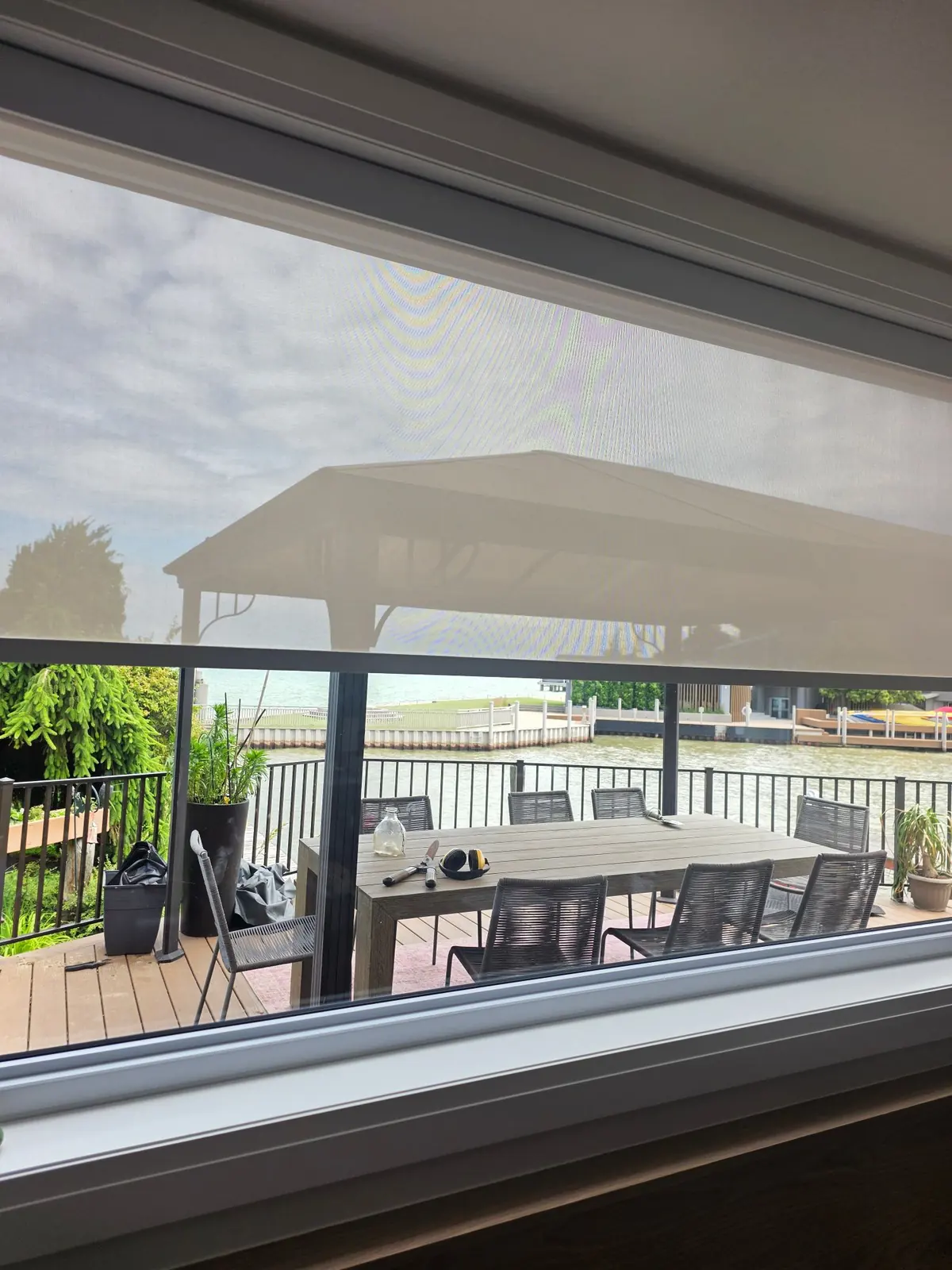
One thing screen shades don't do is give privacy at night. Once your lights are on, people outside can see in. Bedrooms and street-side windows usually get a second, blackout or light-filtering shade on the same bracket. See roller shade fabrics explained.
Protecting floors, furniture and art
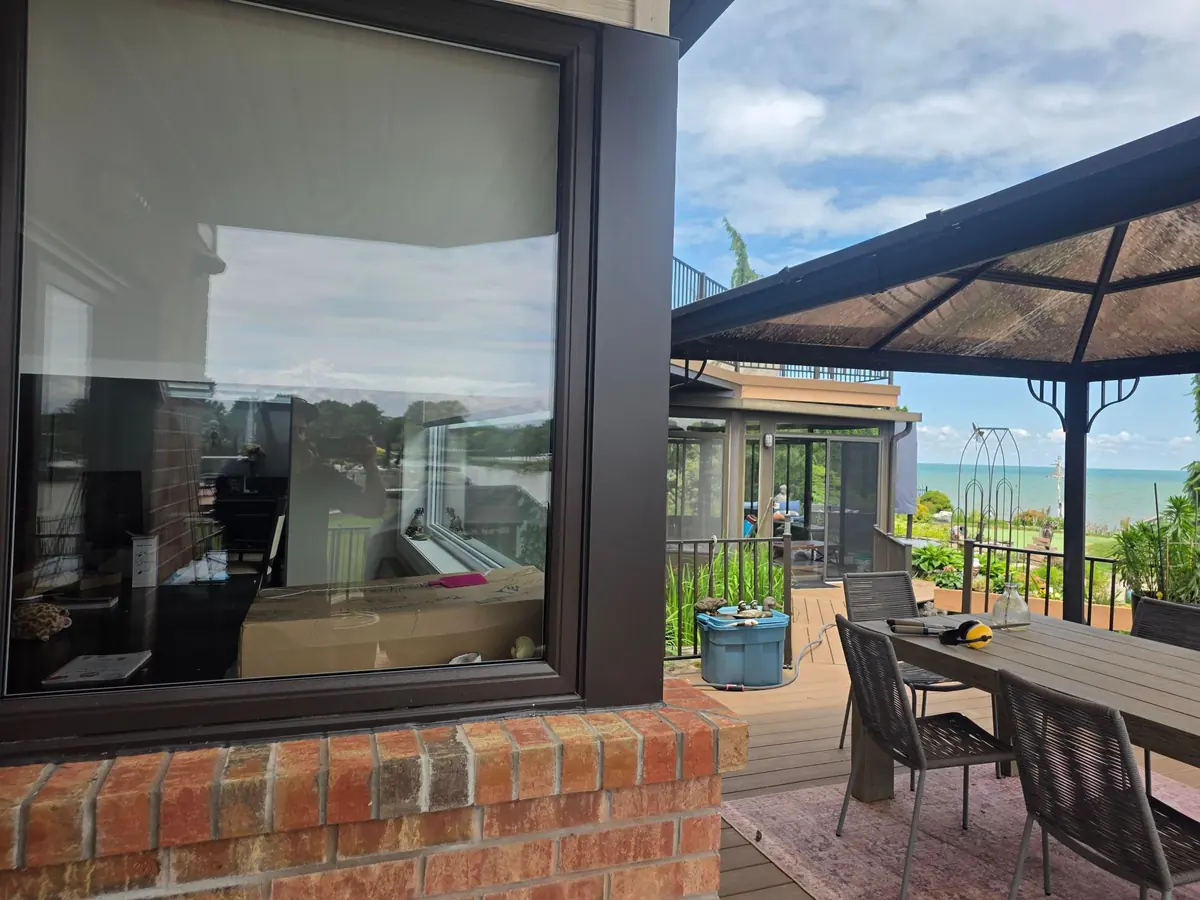
Sun off the water fades hardwood, rugs, leather and artwork. A 3% screen blocks roughly 97% of UV, and lowering shades during the strongest hours protects the room without closing it in. More in shades for south- and west-facing windows.
Big glass, motorized
Waterfront homes tend to have walls of windows, corner glass and wide sliding doors. Motorized shades make them easy: group a whole wall on one button, lower the lake side on a schedule at the hottest time of day, and raise everything at sunset to enjoy the view. Solar motors are a natural fit on south-facing Lake Erie glass, where the panels get plenty of sun. On north-facing Lake St. Clair windows, battery or hardwired motors are the better choice. See choosing a motor.
Cottages and seasonal homes
If the house sits closed for part of the year, choose synthetic, moisture-resistant fabrics over natural fibres, and keep shades partly lowered while you're away to protect floors and furniture. Motorized shades can follow a normal-looking schedule so the house looks lived-in.
Breezy days and open windows
Lakefront homes get opened up to the breeze, and a lowered shade in front of an open window or patio screen will sway and tap against the frame. Side channels or hold-down brackets at the bottom rail keep a shade still, and a motorized shade can simply be raised on windy afternoons with one button.
Let the shades follow the sun
On the water the light changes quickly. Our smart motors (2 Nm of torque) can follow sunrise and sunset through Apple Home, Google Home, Alexa or SmartThings, so lake-facing shades lower themselves when the sun swings around and rise again for the evening view. Every motor and its programming is covered by our full 3-year in-house warranty.
What we usually recommend on the water
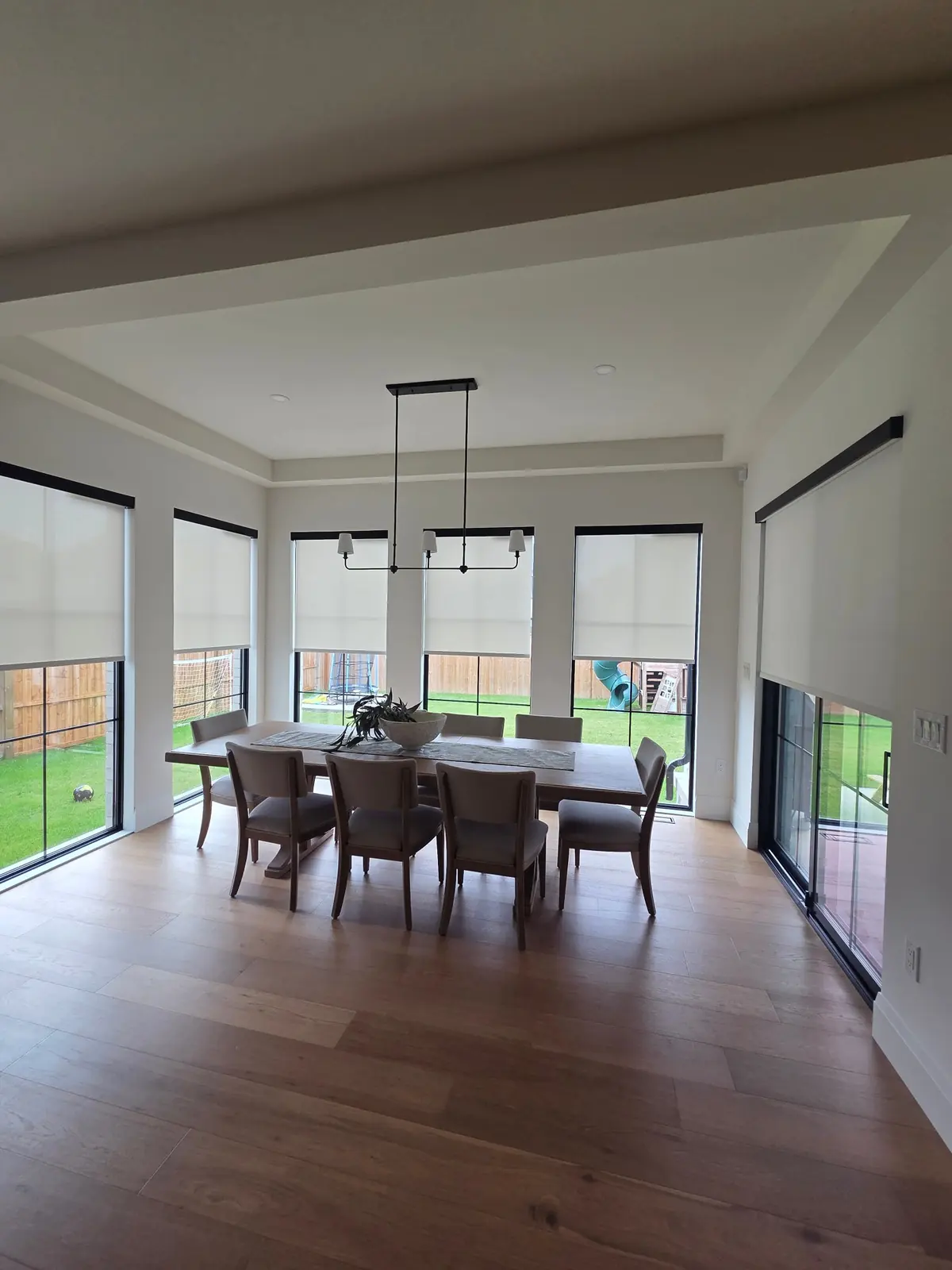
- Living and great rooms: motorized screen shades, 1% to 3% openness, in a darker colour.
- Bedrooms: blackout roller shades, or sheers layered with blackout.
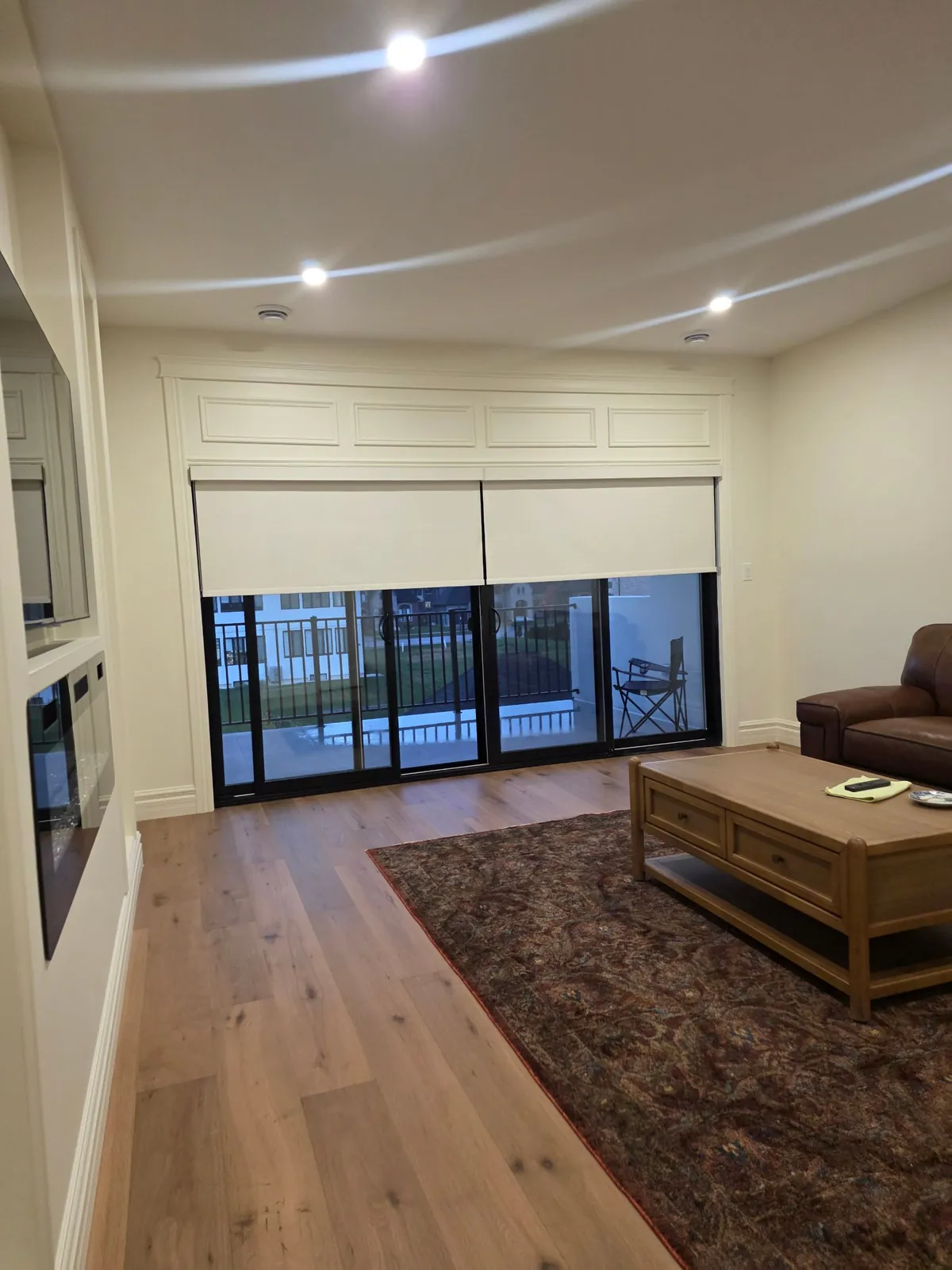
- Patio doors to the deck: a screen shade or vertical sheers. See patio door blinds.
- West-facing glass on Lake St. Clair: a screen shade plus a light-filtering shade for summer sunsets.
Common questions
Will screen shades block my lake view?
No. You see through them, like a fine mesh. Darker colours and a higher openness factor give the clearest view; lighter colours and lower openness give more glare control.
Do screen shades give privacy at night?
No. With the lights on inside, people outside can see in. Add a light-filtering or blackout shade, or drapery, where you need night privacy.
Are solar motors a good idea on the lake?
On south-facing Lake Erie windows, yes: they get plenty of sun. On north-facing Lake St. Clair windows we usually recommend battery or hardwired motors instead.
Can motorized shades open and close with sunrise and sunset?
Yes. Smart home apps can schedule shades around sunrise and sunset, and the times adjust through the seasons automatically.