Layering Sheers with Blackout for Day and Night
One window covering rarely does everything well. Layering gives each piece one job: the sheer handles daylight and the blackout layer handles night.
In short
- By day the sheer softens glare and gives privacy while you keep the light.
- At night the blackout layer closes the room for sleep, movies and full privacy.
- The four combinations below cover almost every room.
- Motorized tracks can run both layers on a schedule.
On this page
Why layer at all
Sheers are lovely in daylight and see-through at night. Blackout fabrics are perfect at night and gloomy by day. Put them together and you get soft, private daylight in the morning and a dark, private room at night, without compromising either.
The four combinations we install most
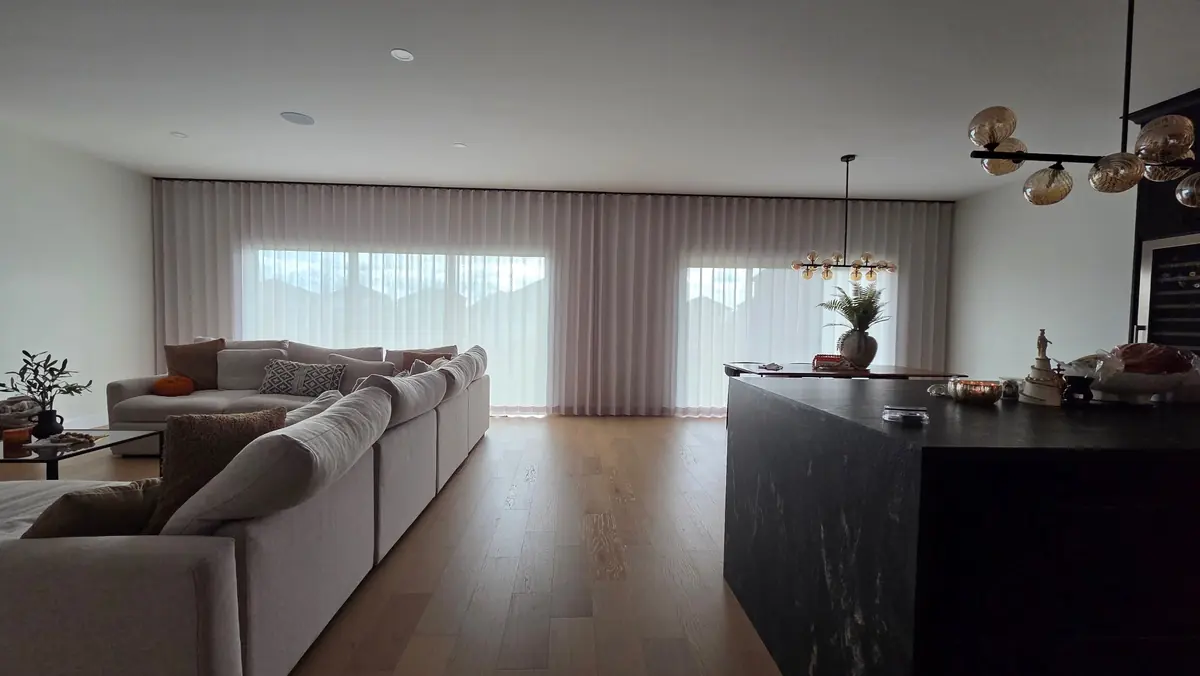
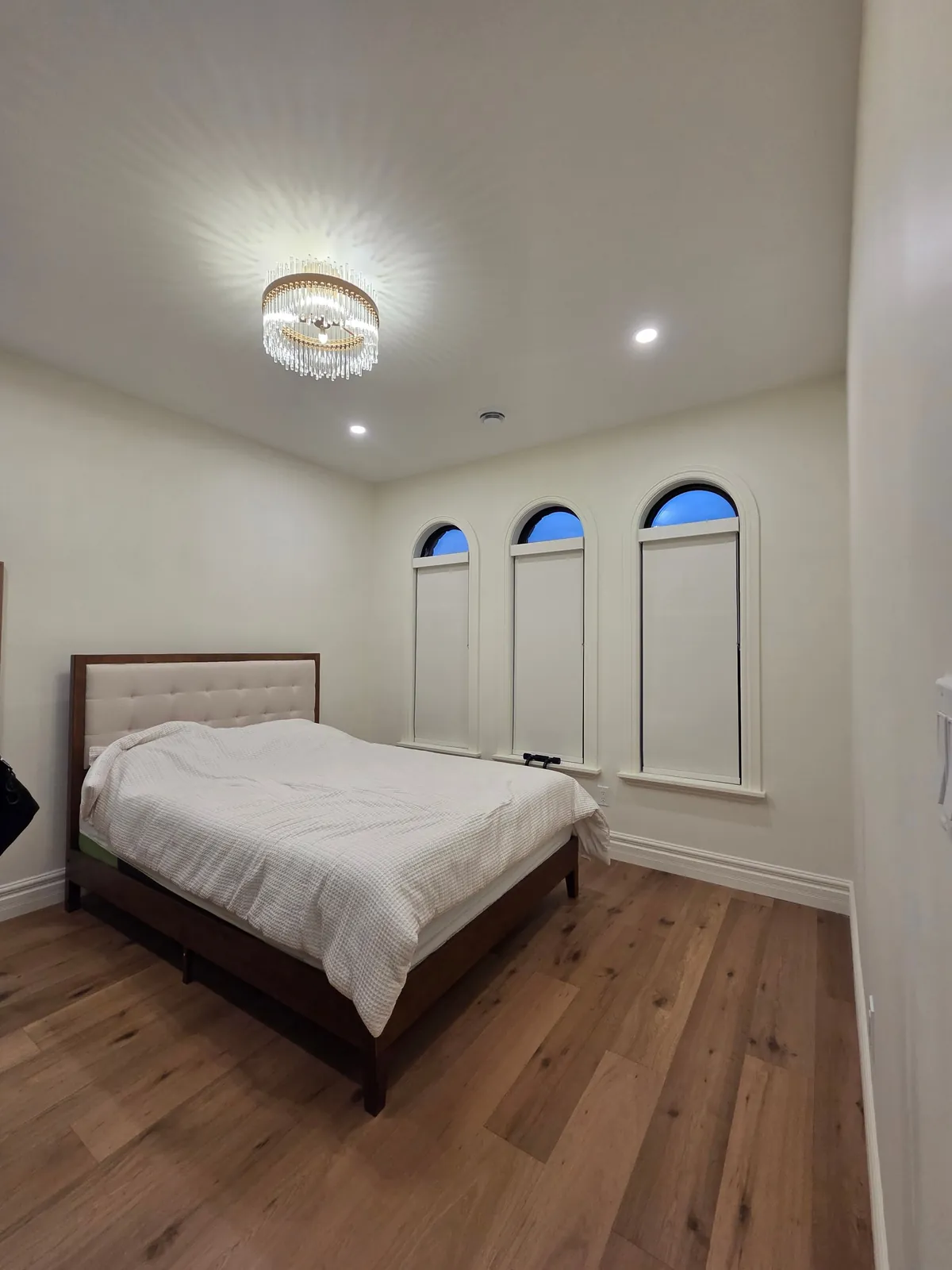
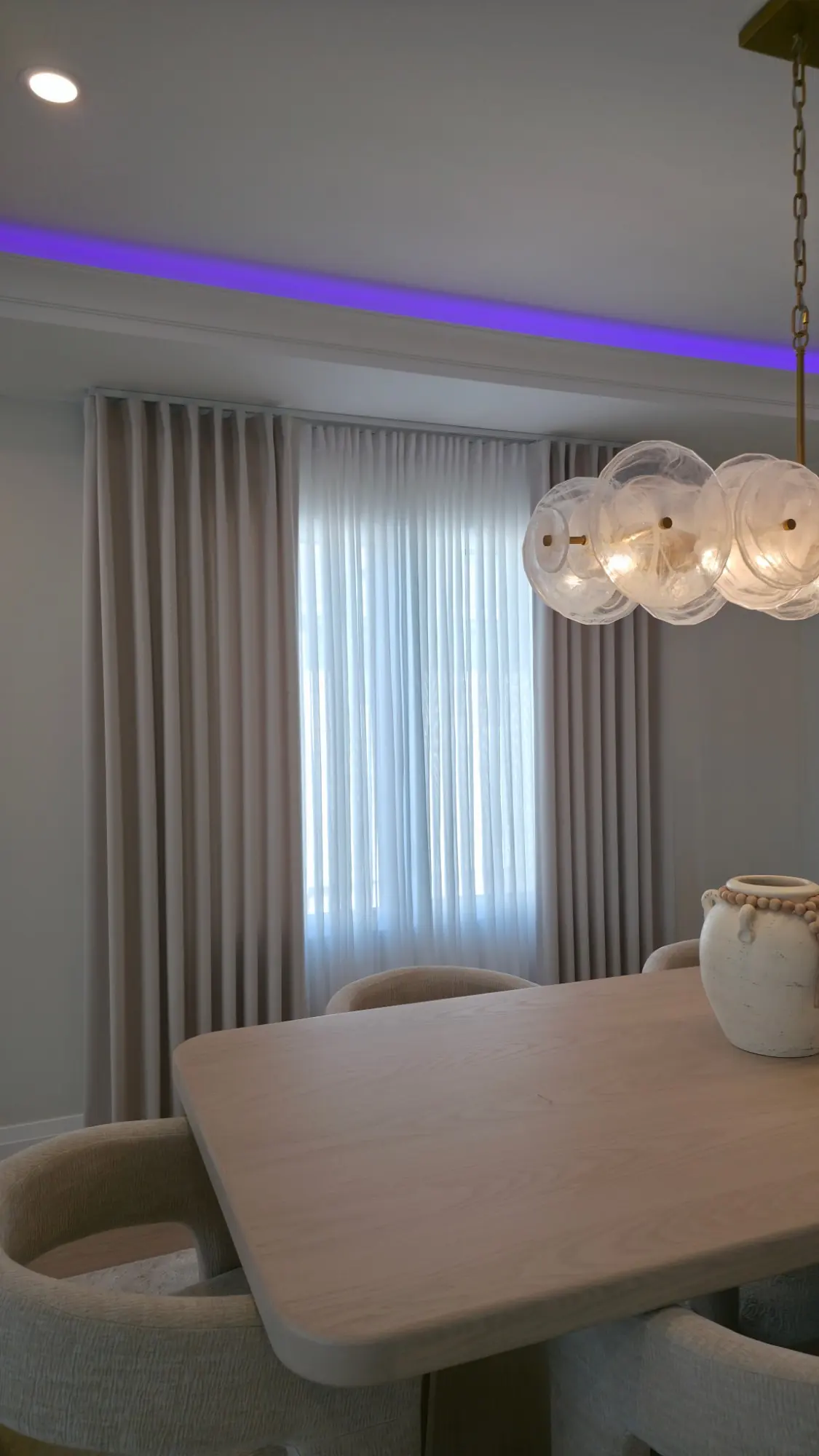
- Sheer drapery in front, blackout roller shade behind. The roller shade sits inside the window frame or just above it, nearly invisible when raised. The sheer hangs on a track in front. Clean, modern and the most popular option in bedrooms.
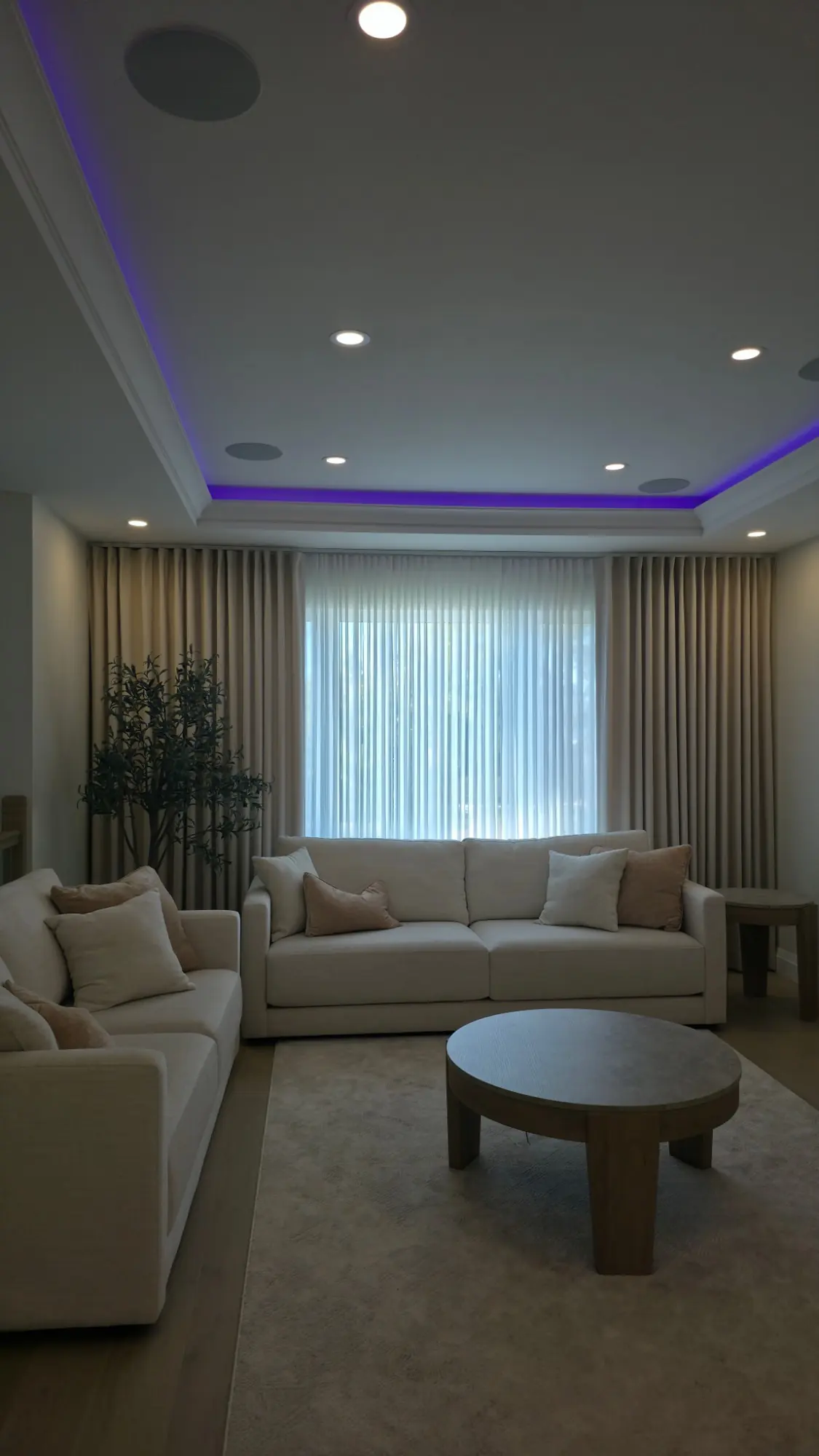
- Sheer and blackout drapery on a double track. Two curtains on two parallel tracks, each opening on its own. Usually the sheer hangs on the back track nearest the glass and the blackout or decorative curtain hangs on the front track.
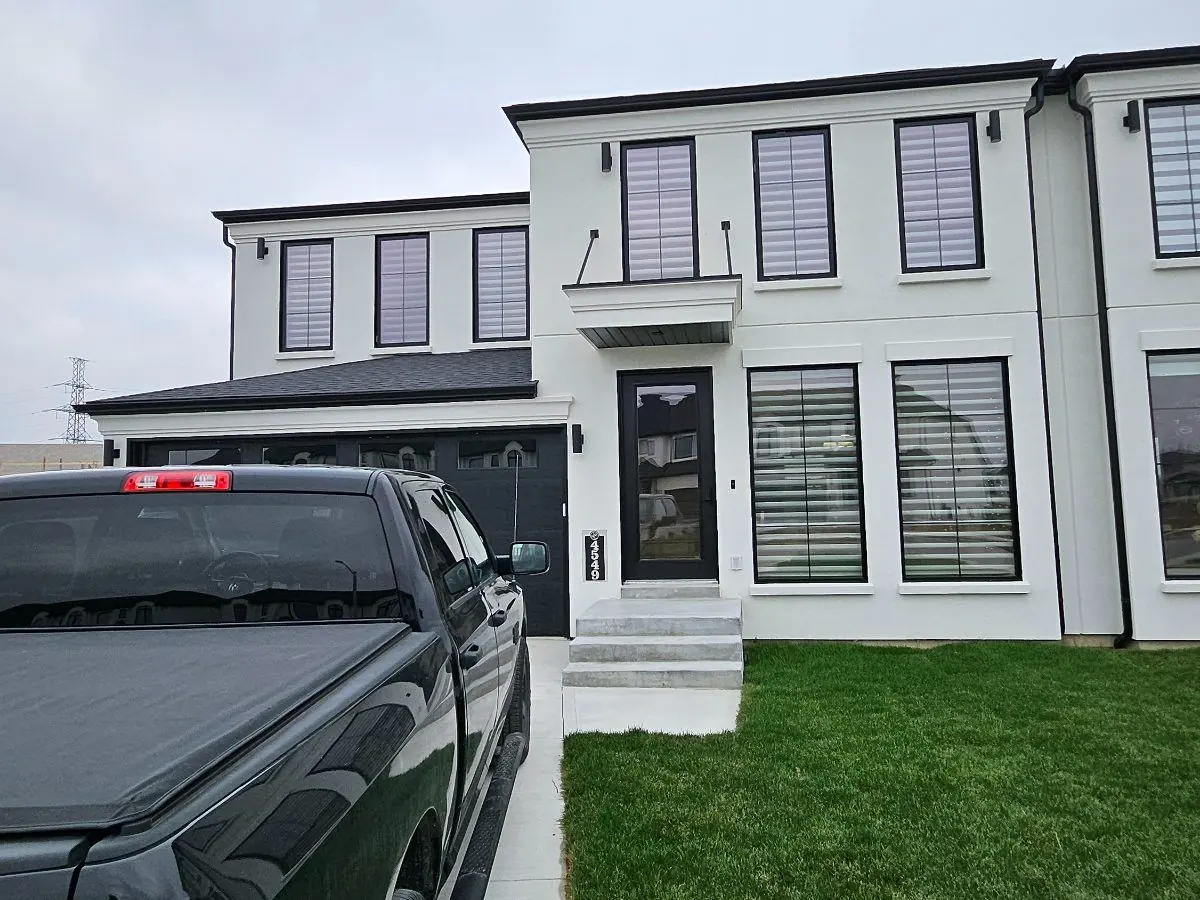
- Zebra blind with side panels. A zebra blind handles light and privacy; stationary drapery panels at the sides add softness and colour.
- Screen shade and blackout shade on one bracket. Two roller shades share a double bracket: a screen shade for daytime glare and a blackout shade for night. Ideal when there is no room for curtains.
Hardware that makes layering work
A double track keeps the two curtains from tangling and lets each one open fully. Ceiling-mounted tracks stop light leaking over the top. Where the track ends at a wall, a return (the curtain wraps back to the wall) closes the side gap. For roller shades behind drapery, a slim cassette keeps the top tidy.
Getting the light right in bedrooms
Blackout fabric stops light coming through the fabric, but light still finds the edges. In a bedroom we usually combine a blackout roller shade, mounted to overlap the frame, with blackout drapery on a ceiling track that overlaps the wall on both sides. The two layers cover each other's gaps. For nurseries and shift workers, see our blackout guide.
Choosing colours
- White and ivory sheers keep rooms bright and look calm from the street.
- A blackout layer one or two shades darker than the sheer adds depth.
- Ask about the backing colour. Many blackout fabrics have a white or neutral back facing the window, so the house looks uniform from outside, whatever colour faces the room.
- We bring both layers to your free visit so you can see them together against your walls and floors.
Motorized layering
With two motorized tracks, or a motorized shade and track, you can set scenes: sheers close at sunrise to stop glare, blackout closes at bedtime, everything opens at 7 a.m. One remote or voice command can run either layer or both. See smart blinds at home.
Every motor and its programming is covered by our full 3-year in-house warranty.
Common layering mistakes
- Tracks mounted just above the frame, which lets light spill over the top and makes ceilings feel lower.
- Too little overlap at the sides, so light shows between the curtains and the wall.
- Sheer and blackout in clashing tones, which looks busy when only one layer is closed.
- No room for the curtains to stack, so open curtains still cover part of the glass.
Common questions
Do I need two separate tracks?
For two curtains, yes: a double track lets each one open and close on its own. For a curtain plus a roller shade, the shade has its own bracket and the curtain has one track.
Will blackout curtains alone make a room dark?
They block light through the fabric, but light leaks at the top and sides unless the track is ceiling-mounted and the curtains overlap the wall. Adding a blackout roller shade behind closes those gaps.
Can both layers be motorized?
Yes. Each layer gets its own motor, and both can be grouped into scenes or controlled separately by remote, app or voice.
Should the sheer or the blackout layer be closer to the window?
With two curtains, the sheer usually hangs nearest the glass and the blackout or decorative curtain in front. With a roller shade, the shade sits closest to the glass and the sheer hangs in front.