Blinds for Older Windsor Homes: Walkerville, Sandwich, Roseland and South Windsor
Windsor's older neighbourhoods have some of the most beautiful windows in the region, and some of the trickiest. Here's how we fit them without hiding what makes them special.
In short
- Walkerville and Sandwich homes often have tall windows, deep original trim and plaster walls.
- Postwar homes in South Windsor and Fontainebleau tend to have wide picture windows.
- Out-of-square frames call for careful inside-mount measuring, or a well-placed outside mount.
- Honeycomb shades and lined drapery make drafty original windows more comfortable.
On this page
Neighbourhood by neighbourhood
- Walkerville was founded as a model community for Hiram Walker's distillery workers and has some of Windsor's grandest homes. Willistead Manor dates from 1906.
- South Walkerville is one of Windsor's oldest residential developments, with streets named after First World War battles.
- Sandwich was settled in 1749, and many of its buildings date to the mid-1800s.
- Roseland has many homes built before the Second World War on large lots.
- South Windsor was built mostly in the 1950s and 1960s, and Fontainebleau mainly in the same decades.
- Forest Glade followed in the late 1960s and early 1970s.
Each era has its own windows: tall double-hungs in the older streets, wide picture windows in the postwar ones.
Tall double-hung windows
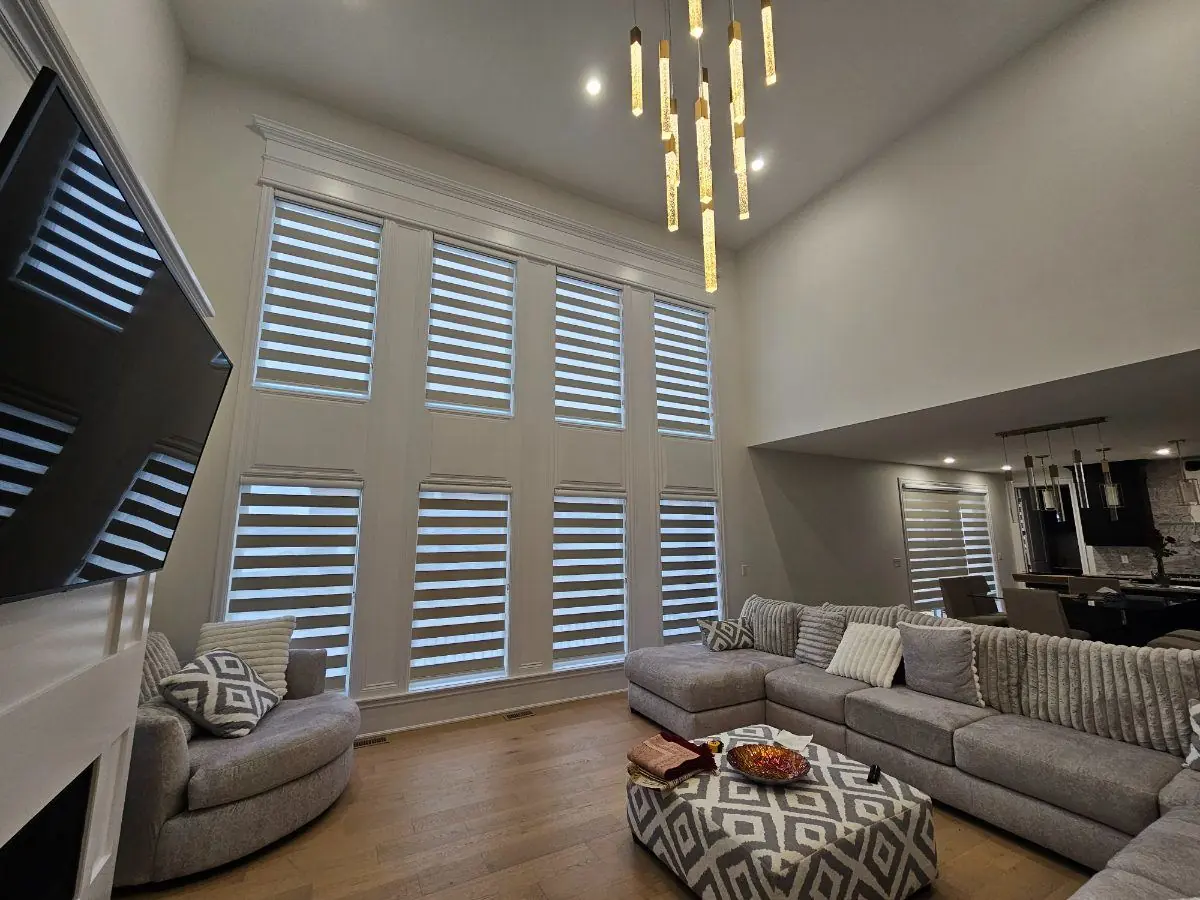
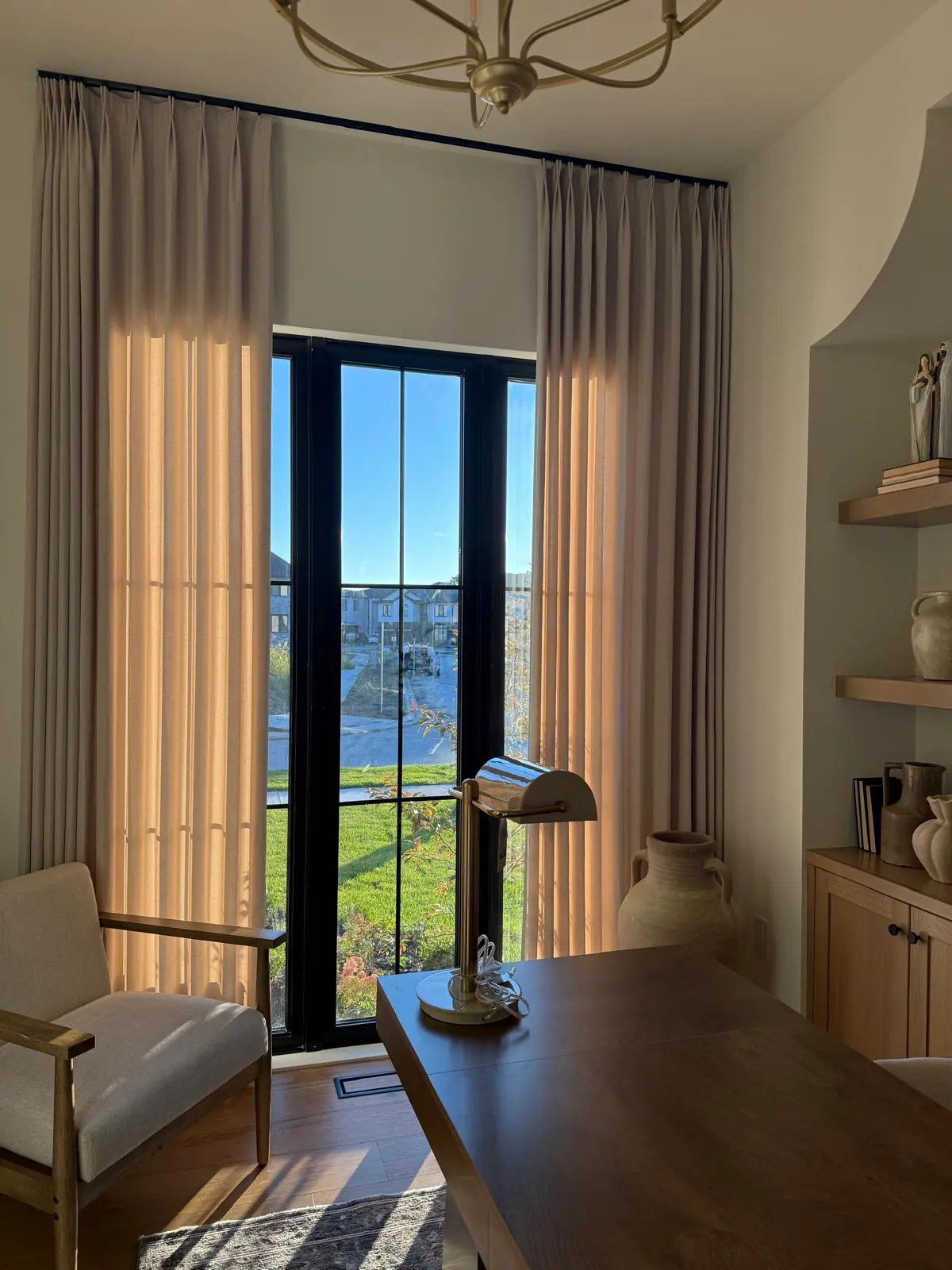
Tall, narrow windows suit shades that stack neatly at the top. Roman shades look at home in traditional rooms, and zebra blinds give modern light control in a soft neutral. Drapery mounted close to the ceiling makes high ceilings feel even taller. See Roman shades and how high to hang curtains.
Inside or outside mount?
- Inside mount shows off good trim, but only works if the frame is deep enough and reasonably square. We measure the width at the top, middle and bottom and use the narrowest.
- Outside mount, fixed to the top of the trim or the wall above, hides an out-of-square frame, covers gaps and blocks more light and drafts.
Plaster, lath and old framing
Lath-and-plaster walls and century-old framing need different anchors from modern drywall, and careful drilling so the plaster doesn't crack. We bring the right hardware and find solid fixing points before we drill.
Drafts and comfort
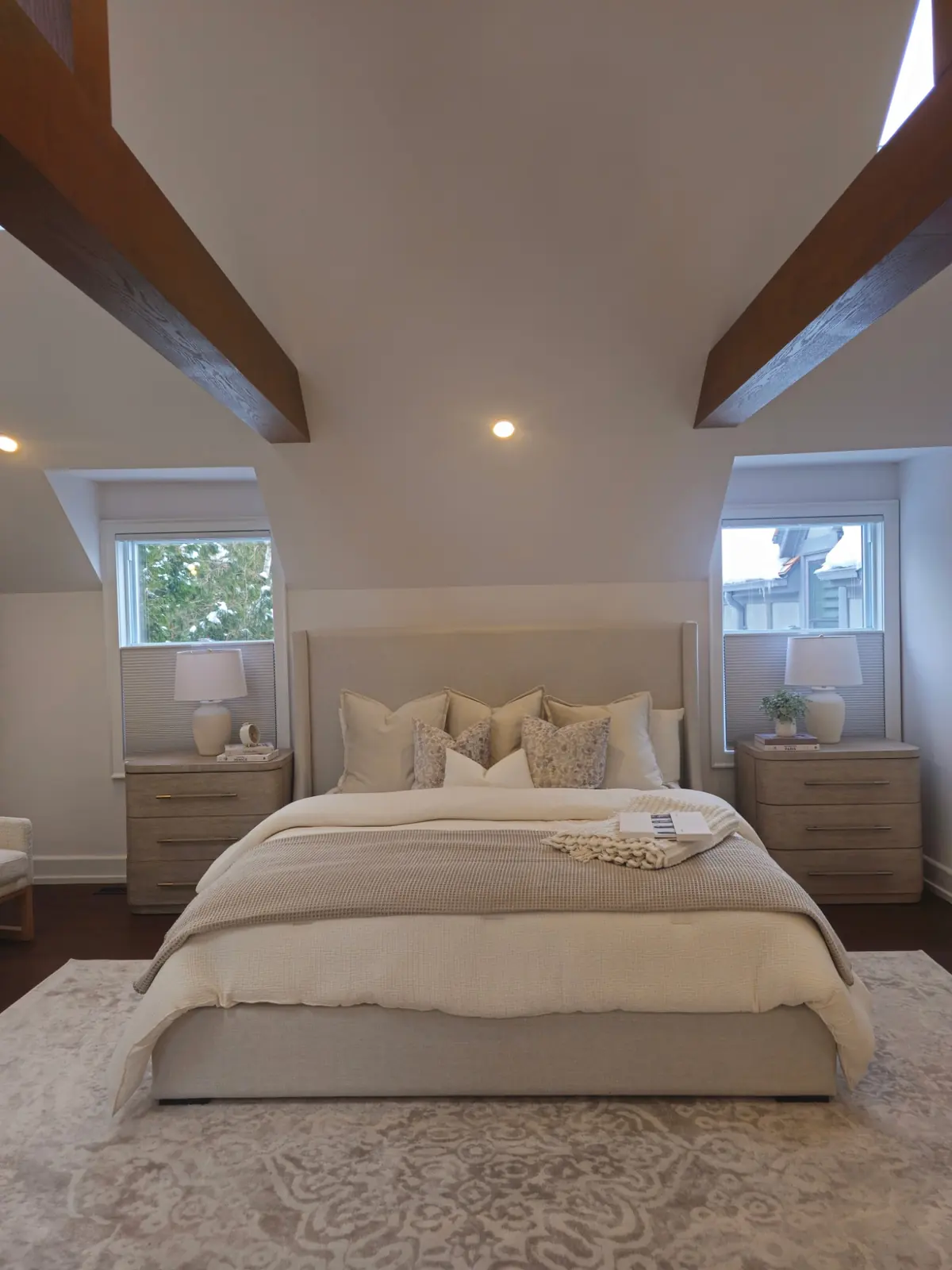
Original windows can be beautiful and cold. Double-cell honeycomb shades trap air in their cells and add the most insulation of any shade; lined drapery over a shade adds another layer; an outside mount overlaps the frame and blocks more moving air. See honeycomb shades.
Picture windows in postwar homes
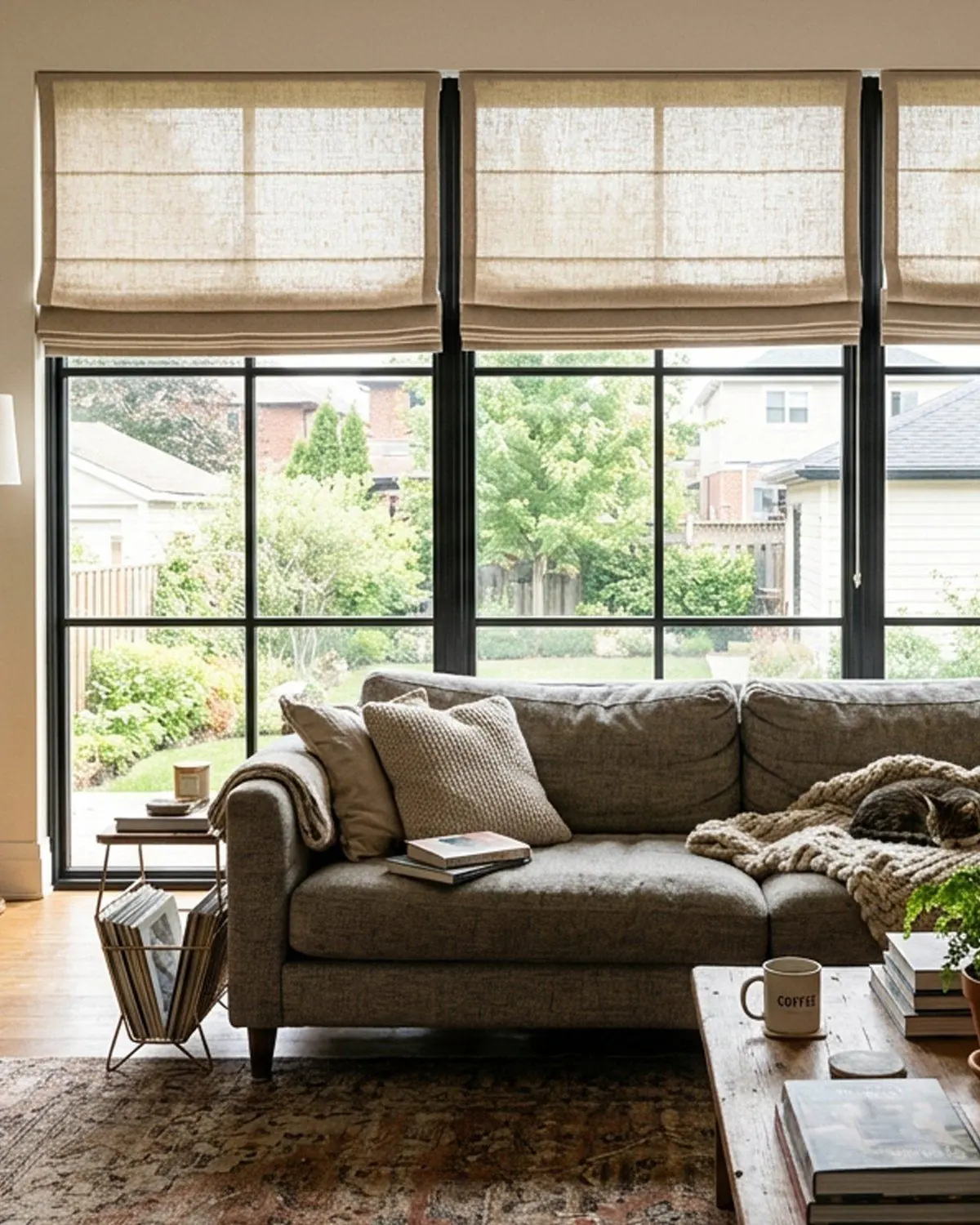
Bungalows and back-splits from the 1950s and 1960s often have one wide picture window in the living room. It can take one wide shade or several side by side, depending on its width and the window's divisions. See shades for large picture windows.
Radiators, deep sills and stained glass
- Keep fabric clear of radiators: shades that stop at the sill work better than long curtains above a radiator.
- Deep sills are perfect for inside-mounted shades.
- Stained or leaded glass is usually best left uncovered, with a shade on the clear glass only.
Common questions
Can you fit blinds inside old, out-of-square windows?
Often, yes. We measure at several points and size the blind to the narrowest width. If the frame is too far out of square, an outside mount looks better and blocks more light.
Will drilling damage our plaster walls?
Not when it is done carefully. We use anchors made for plaster and find solid fixing points before drilling.
Do you work in Walkerville and Sandwich?
Yes. Free in-home visits cover every Windsor neighbourhood, from Sandwich and Walkerville to Riverside and Forest Glade.