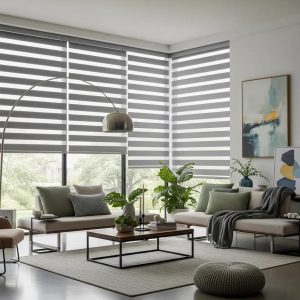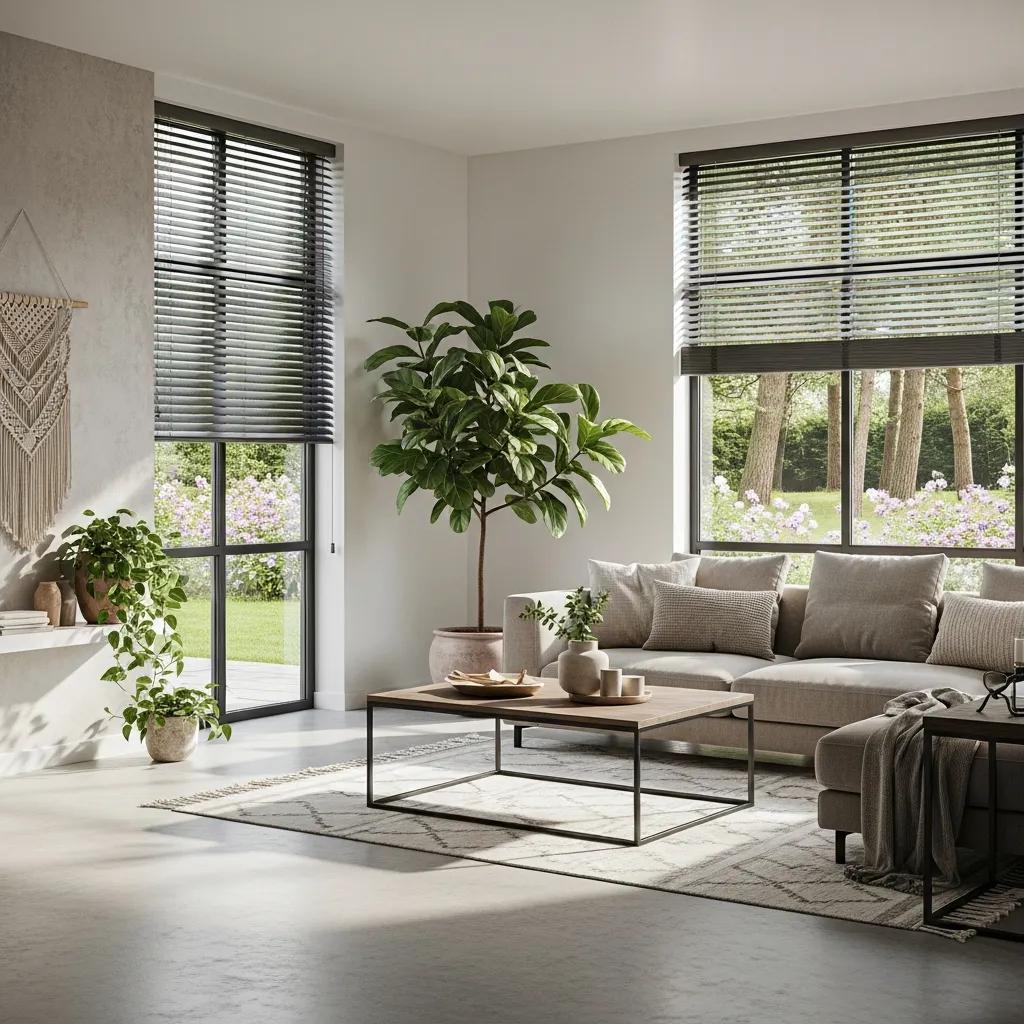
Motorized Blinds Benefit
Advantages of Motorized Blinds: Discover the Key Benefits for Windsor Homes
Motorized blinds are automated window coverings powered by small motors and smart controls that raise, lower, or tilt slats on command, delivering convenience, energy savings, and safer living spaces for homeowners. This article explains how motorized shades and smart blinds produce measurable benefits—convenience through app and voice control, energy reduction by programmable shading, and improved safety via cord-free designs—specifically relevant to Windsor and Essex County homes. Many homeowners face daily friction with manual shades, higher heating and cooling bills, and safety concerns for children or pets; motorized window treatments address these problems by automating light, privacy, and thermal control on schedules tied to routines and weather. Read on for clear explanations of how motorized blinds integrate with common smart home systems, how they reduce energy costs and UV damage, why they improve accessibility and security, and which motor types—solar, wired electric, or battery—best suit local installation conditions. Practical lists, comparison tables, and real-world decision criteria are included so you can match technology to your priorities and follow a straightforward path to selection and installation.
What Makes Motorized Blinds the Ultimate Convenience for Homeowners?
Motorized blinds centralize control of light and privacy by using motor units, remotes, and apps to automate daily routines, which reduces manual effort and streamlines household schedules. This mechanism works through programmable timers, scene presets, and connectivity to smart home hubs so blinds can open with your morning routine or close automatically at sunset to reduce glare and improve comfort. The direct benefit is less friction: one-touch or voice-driven commands replace repeated manual adjustments, saving time and reducing physical strain for household members. Beyond simple commands, automation enables scenarios—wake-up routines, bedtime closures, and away-mode scheduling—that increase convenience while supporting energy goals and security. Understanding these control methods leads naturally into the specifics of how different control options deliver that effortless automation in practice.
Motorized blinds deliver effortless control with multiple interface options that fit different lifestyles and technical preferences. The most common control methods are dedicated remotes, manufacturer apps (for smartphones and tablets), and integration with voice assistants, each offering different trade-offs between simplicity, granularity, and automation complexity. For many families, a remotes-plus-timer setup provides immediate ease-of-use without deep technical setup, while app-based control adds remote access and scheduling; voice integration further simplifies hands-free commands for busy routines. These choices map to typical use cases—single-room convenience, whole-home automation, or accessibility support—and the next section explains how these systems mesh with mainstream smart home ecosystems.
How Do Motorized Blinds Provide Effortless Control and Automation?
Motorized blinds provide effortless control by combining a motor unit with user interfaces such as remotes, smartphone apps, and timers to execute scheduled or on-demand movements. This mechanism reduces manual adjustments by translating routines (wake-up, work-from-home glare control, evening privacy) into automated scenes that run without intervention, which improves daily comfort and consistency. For example, a morning routine can open bedroom shades gradually to support circadian rhythms, while an away routine closes blinds at dusk to simulate occupancy and deter intruders. Users can choose local controls for simplicity or cloud-connected apps for remote operation and cross-device synchronization, and those choices affect installation complexity and integration options. These control pathways set up the next consideration: integrating blinds into broader smart home systems for deeper automation and voice control capabilities.
Can Motorized Blinds Integrate Seamlessly with Smart Home Systems?
Motorized blinds commonly integrate with smart home ecosystems like Google Assistant and Amazon Alexa through native or third-party hubs, enabling voice control, routines, and event-driven automation across devices. Integration typically involves pairing the blind system with a bridge or hub that supports common protocols, allowing voice commands like “close living room shades” and routine-based triggers like “when thermostat sets to away, lower shades.” Benefits include scene-based coordination—blinds, lights, and HVAC operating together—and sensor-driven responses such as lowering shades when interior light sensors detect glare. To prepare for installation, ask your installer about platform compatibility, required hubs, and whether local control persists if internet access is lost; these questions ensure reliable integration and inform your choice of motor and control architecture.
How Do Motorized Blinds Enhance Energy Efficiency and Reduce Costs?
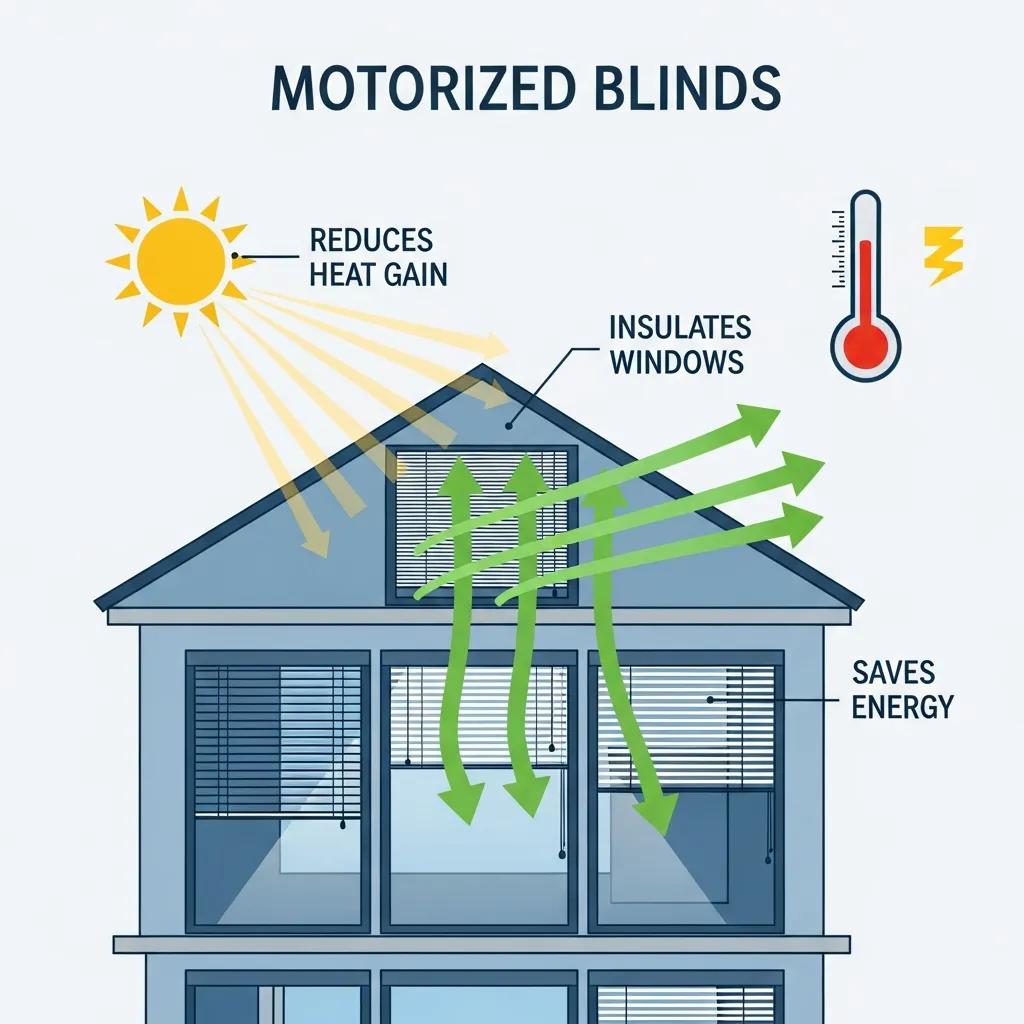
Motorized blinds reduce energy consumption by improving insulation, controlling solar gain with schedules, and minimizing UV-driven heat loads that force HVAC systems to work harder. By operating on programmable schedules or responding to sensors, automated shades prevent excessive daytime heat in summer and allow passive solar warming in winter, which lowers heating and cooling runtime and associated costs. The combined mechanisms—improved R-value from closed shades, strategic daylight harvesting, and peak-load avoidance through timed shading—translate into measurable energy impacts for homes in Windsor-Essex and London climates where seasonal solar angles and humidity affect HVAC demand. The table below compares specific energy-related functions and their typical impact to help homeowners evaluate priority measures.
| Feature | Energy Mechanism | Typical Impact |
|---|---|---|
| Insulating Closed Position | Adds thermal barrier to windows, reducing conductive heat loss/gain | Lowers heating/cooling load by up to several percent seasonally |
| Scheduled Solar Gain Control | Timed shading reduces peak sun exposure during hot hours | Reduces peak cooling demand and HVAC runtime |
| UV/Glare Management | Limits harmful UV and visible heat transmission | Protects interiors and decreases A/C cycles during sunny periods |
This comparison clarifies how combined strategies—insulation plus scheduling and UV control—work together to reduce utility consumption and extend interior longevity. The interplay of these mechanisms leads to specific roles for scheduling and material choices discussed next.
What Role Do Motorized Blinds Play in Temperature Regulation and Insulation?
Motorized blinds improve temperature regulation by creating a controllable thermal layer at the window that reduces conductive heat transfer and adapts to daily solar patterns. By closing during peak sun in summer and opening to harvest passive solar heat in winter, programmable shades reduce HVAC cycling and stabilize indoor temperatures. The practical outcome is less strain on heating and cooling equipment, which means lower energy bills and more consistent comfort across rooms exposed to strong sun. Implementing schedules and using insulating fabric or cellular constructions magnify these gains, and homeowners should match shading strategies to room orientation and daily usage patterns to maximize results.
How Do Motorized Blinds Help Minimize UV Damage and Maximize Natural Light?
Motorized blinds manage UV exposure by enabling precise, repeatable positioning that filters damaging wavelengths while preserving useful daylight for tasks and mood. Fitted fabrics with UV-blocking properties, combined with partial-open presets and tilt functions, let homeowners protect furniture and flooring from fading without losing visual brightness. Automated routines can also implement daylight-harvesting strategies that open shades when indirect light is abundant and close them when direct sun causes glare, striking a balance between illumination and protection. Adopting sensor-assisted or schedule-based presets ensures consistent protection and optimizes daylight use across the day.
Discover Top Benefits of Motorized Blinds for Windsor & Essex Homes
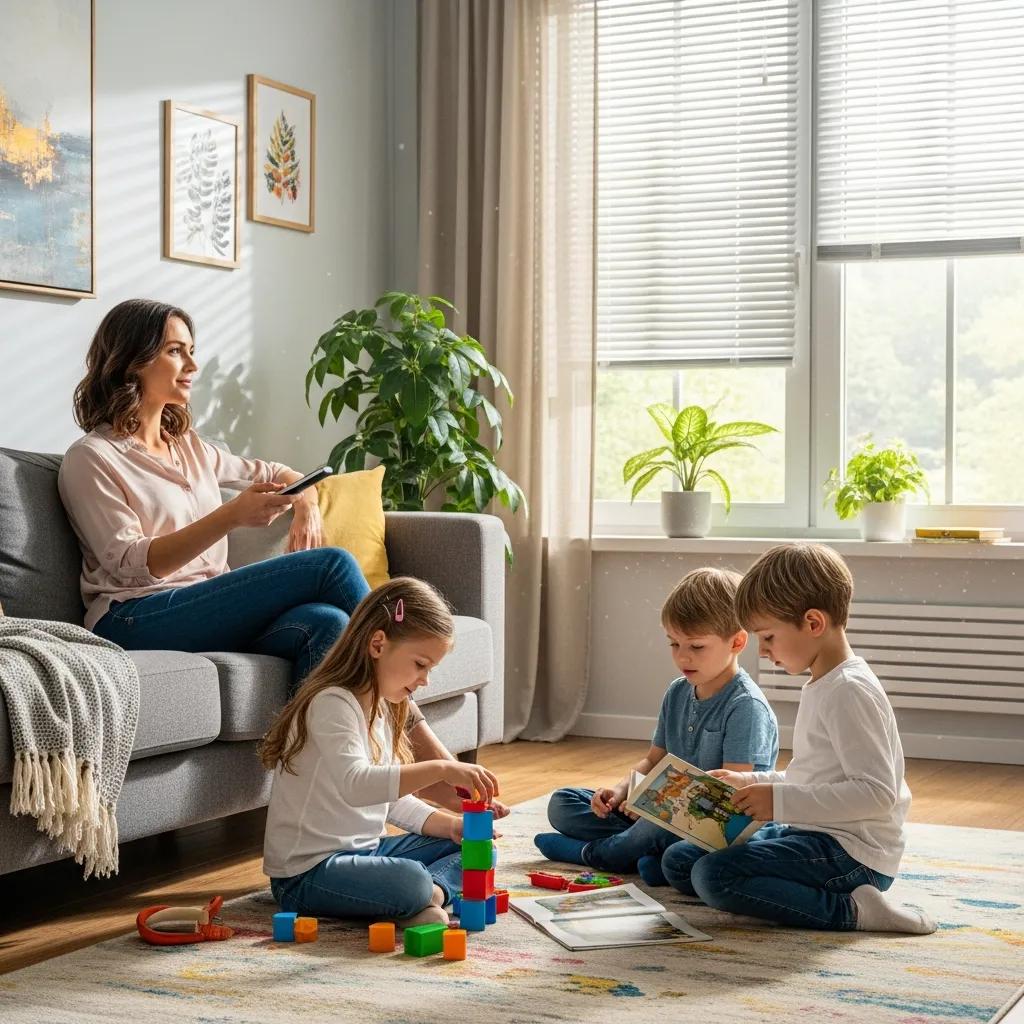
Motorized blinds eliminate exposed cords and offer hands-free operation, which reduces entanglement risks for children and pets and enhances independence for older adults and those with mobility constraints. The core safety mechanism is cord-free actuation driven by internal motors or power packs, removing a common household hazard and simplifying maintenance. Accessibility improves because users can operate blinds via remotes, apps, or voice commands without physical reach, which makes upper-story or deep-reach windows practical and safe for all household members. These advantages create a safer, more inclusive home environment and lead directly into specific safety practices and recommendations.
Motorized blinds remove dangling cords and thus significantly lower the risk of strangulation and entanglement, a primary safety improvement over manual blinds. In addition to being cord-free, motorized systems often include features such as obstruction detection and soft-start/stop motor profiles that reduce mechanical stress and accidental damage. For families, the shift to automated shades is a single-step mitigation that complements other child-safety measures, and it also simplifies cleaning and operation for caregivers and seniors. The next section provides a short, actionable checklist you can apply when evaluating motorized options for safety.
How Does the Cord-Free Design Improve Child and Pet Safety?
Cord-free motorized blinds remove looped or dangling cords from the environment, directly addressing the strangulation risk associated with traditional corded window coverings. This design change reduces the need for cord-clearing devices or clamps and removes a frequent hazard in bedrooms and play areas, making motorized shades a safer default choice for family homes. Additional safety features such as programmed lockouts, scheduled closures when children are unsupervised, and low-voltage motors further enhance protection and reduce accidental operation. When selecting motorized systems, verify that the control methods and placements keep controls out of reach and consider presets that eliminate the need for direct interaction in child-accessible rooms.
Are Motorized Blinds Ideal for Hard-to-Reach Windows and Seniors?
Motorized blinds are especially helpful for high, multi-story, or otherwise inaccessible windows where manual operation is impractical or unsafe, providing remote or voice-controlled adjustments without ladders or long poles. For seniors and mobility-impaired residents, preset scenes and one-touch routines restore independence by making daily light and privacy adjustments effortless. Selecting appropriate control types—simple remotes for straightforward use, app controls for caregivers, or voice activation for hands-free operation—ensures the system matches user ability and household routines. Considering these accessibility benefits, the next section explores how motorization supports privacy, security, and light customization.
What Privacy and Light Control Advantages Do Motorized Blinds Offer?
Motorized blinds provide instant privacy on demand and fine-grained daylight control through partial positioning, tilt mechanisms, and programmable scenes that match daily living patterns. The mechanism combines precise motorized positioning with presets so rooms can switch between daylight, task lighting, and privacy modes with a single command. This improves security by enabling scheduled presence simulation when homeowners are away and enhances comfort by removing glare during screens-and-work hours without darkening the room completely. The section below describes practical privacy and security setups and follows with a mini-guide on customizing light levels for different rooms.
Automated shading supports privacy and home security through timed closures and randomized scheduling that simulate occupancy while preventing predictable patterns. One-touch privacy modes close living areas at evening or when guests arrive, and integration with home automation allows blinds to respond to motion sensors or security alarms for instant privacy or visibility as needed. These scheduling capabilities reduce the burden on homeowners to remember manual adjustments and increase resilience against opportunistic theft. The next paragraph provides a checklist for secure shading setups you can implement in any home.
How Do Motorized Blinds Provide Instant Privacy and Security?
Motorized blinds enable immediate privacy via one-touch controls and scheduled scenes that close windows at preset times or in response to security events, providing both convenience and deterrence. Automated schedules can simulate occupancy while away, lowering the risk of break-ins by creating variable light patterns that mimic presence. For enhanced security, pair shading scenes with lighting routines and motion sensors so blinds react dynamically to anomalies, and ensure remote access is secured with strong authentication to prevent unauthorized control. These measures make automated blinds both a privacy tool and a component of a layered home-security strategy.
How Can You Customize Light Levels with Motorized Window Shades?
Customizing light levels with motorized shades involves using partial positions, tilt settings, and named presets to achieve preferred daylight profiles for rooms such as home offices, bedrooms, and media spaces. Presets simplify repeated settings—morning, work, and evening scenes—while sensors can adjust positions based on ambient light for daylight harvesting. For rooms requiring screen visibility, micro-adjustments reduce glare without sacrificing overall brightness, and for display areas, UV-blocking presets protect furnishings. This ability to tune light precisely supports comfort and energy goals and helps identify which motor and control combinations best meet household needs.
Which Types of Motorized Blinds Are Best for Windsor and Essex County Homes?
Choosing the right motorized blind power source—solar powered, wired electric, or battery powered—depends on installation constraints, desired integration depth, and local climate patterns. Solar-powered motors reduce wiring needs and perform well on sun-exposed windows, electric wired motors provide the most reliable continuous power for whole-home installs and deeper integration with building systems, and battery-powered options offer retrofit flexibility without significant electrical work. Matching these power types to local sunlight patterns, typical room orientation, and retrofit vs new-construction scenarios is essential for long-term performance and homeowner satisfaction. The comparison table below summarizes pros, cons, and best-use cases to guide decisions for Windsor and Essex County homes.
| Power Type | Power Source | Pros | Cons | Best-for |
|---|---|---|---|---|
| Solar Powered Motorized Blinds | Integrated solar panel + rechargeable cell | No wiring, eco-friendly, low maintenance | Performance depends on sun exposure and panel positioning | South- or west-facing windows with ample daylight |
| Electric Wired Motorized Blinds | Hardwired to home electrical system | High reliability, ideal for whole-home integration | Requires professional wiring at install | New builds and centralized smart homes |
| Battery Powered Motorized Blinds | Rechargeable or replaceable batteries | Flexible retrofit option, minimal wiring | Needs periodic charging/battery replacement | Retrofits and hard-to-wire locations |
This side-by-side view helps homeowners prioritize reliability, installation complexity, and sustainability when selecting motor types. After evaluating power sources, consider the specific benefits and trade-offs for solar options and wired/battery setups below.
What Are the Benefits of Solar Powered Motorized Blinds?
Solar powered motorized blinds harness daylight to recharge onboard batteries, eliminating the need for wiring and reducing operational energy costs while offering an eco-friendly option for sunlit windows. The main advantages include simpler installation for retrofit projects, lower ongoing energy draw, and suitability for south- and west-facing windows that receive consistent light. Maintenance is generally limited to occasional cleaning of the solar panel and ensuring battery health, and installers may recommend panel placement that maximizes exposure without altering window aesthetics. For homeowners prioritizing sustainability and minimal invasive installation, solar motors are an attractive choice.
How Do Electric Motor and Battery Powered Blinds Compare?
Electric wired motors deliver continuous, reliable power suited to whole-home automation and heavy-use locations, while battery-powered motors prioritize flexible installation and minimal disruption where wiring is impractical. Wired systems integrate easily with centralized smart-home controllers and remove battery replacement concerns, but they typically require professional installation and upfront wiring work. Battery options are ideal for retrofits, lofts, or decorative windows where running cable is costly, and modern rechargeable packs can offer long intervals between charges. When choosing between them, weigh reliability and integration depth against installation cost and flexibility.
For homeowners who want hands-on help matching motor type to their home, WE BLINDS and curtain can guide selection and installation while inviting customization and consultations. Discovering which motor suits your specific window orientations and usage patterns is best done with an in-home evaluation that considers sunlight exposure, wiring accessibility, and desired control methods. This approach lets you tailor motor choices to long-term comfort and energy goals while minimizing installation surprises.
Why Choose WE BLINDS and curtain for Motorized Blinds in Windsor and London?
To provide useful information about window treatment options, showcase products and services, and lead potential customers to discover, customize, and purchase through consultations and installation. WE BLINDS and curtain positions this mission within local service by offering personalized guidance, free no-obligation home consultations, and expert installation to ensure motorized blinds perform as designed in Windsor-Essex County and London, Ontario. The company emphasizes convenient scheduling, a wide selection of energy-efficient options, and financing choices that help homeowners adopt motorized solutions without excessive upfront costs. Presenting these service elements after the technical and benefit-focused guidance above allows readers to act on informed preferences while preserving topic-first balance.
WE BLINDS and curtain’s process centers on tailored recommendations during a free consultation, where installers assess window orientations, discuss motor options (solar, wired, battery), and present fabric and control choices aligned with household needs. Personalized samples and on-site measurements help predict energy impacts and ensure fit, while financing options reduce initial barriers for comprehensive automation projects. Professional installation follows a testing phase to confirm presets, voice integration, and reliability, and this end-to-end support reduces risk and preserves warranties—benefits that complement the technical advantages covered earlier.
What Personalized Services and Free Consultations Does WE BLINDS Offer?
During a free, no-obligation home consultation, WE BLINDS and curtain provides in-home measurements, fabric and motor demos, and tailored recommendations that match window orientation and family routines to motor and control choices. The consultation typically includes discussion of energy-saving goals, child-safety preferences, and preferred smart-home integrations so the chosen solution aligns with lifestyle and technical needs. This personalized approach reduces decision friction and helps homeowners visualize presets, materials, and operation before committing to installation. Understanding this process clarifies how selection choices translate into installed performance and long-term value.
How Do Financing Options and Expert Installation Enhance Customer Experience?
Financing options reduce upfront cost barriers for whole-home motorization projects, making reliable electric or multiple-window systems more accessible to homeowners who prefer phased investment. Expert installation ensures motors, mounts, and controls are correctly specified and tested, preserving product warranties and avoiding common issues like misalignment or signal interference. Professional installers also validate scene programming, confirm compatibility with existing smart hubs, and provide operational training so families confidently use their new shades. These services combine to maximize both short-term convenience and long-term reliability for motorized systems.
- Common homeowner goals addressed by motorized blinds:Energy reduction, daily convenience, child safety, accessibility.
- Key questions to ask during a consultation:Which motor type suits window orientation; what control options are preferred; are financing options needed.
- Quick selection checklist before installation:Confirm window exposure, measure mounting depth, choose control method.
If you are considering motorized shades, a topic-first evaluation of control, energy, safety, and power source will guide a durable choice; WE BLINDS and curtain offers localized support—including free consultations, tailored recommendations, financing options, and professional installation—to transform those choices into installed performance that suits Windsor-Essex and London homes.